
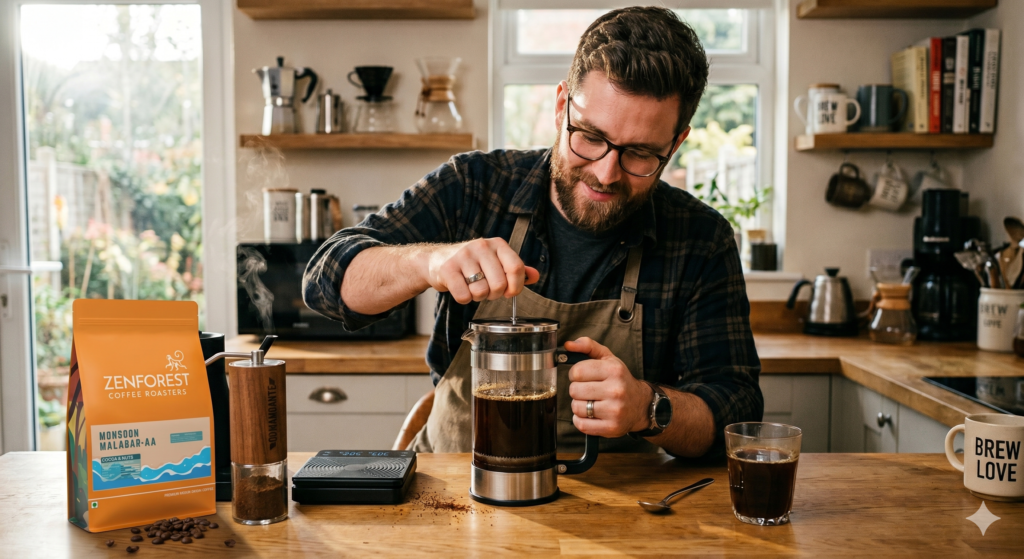
French Press remains one of the most popular brewing methods among coffee enthusiasts because it produces a rich, full-bodied cup that highlights the natural oils and flavours of the coffee bean. Unlike paper-filter brewing methods, French Press allows more of the coffee's natural character to reach your cup, making coffee selection especially important.
In this guide, we'll explore how to choose the best coffee for French Press and which coffees deliver the most satisfying results.
Why Coffee Choice Matters in French Press
French Press brewing uses full immersion extraction, where coffee grounds remain in contact with water for several minutes before being separated using a metal filter. Because no paper filter removes oils and microscopic particles, the resulting cup often tastes fuller-bodied, richer in texture, more aromatic, and significantly more flavour-forward.
This makes bean selection one of the most important factors in achieving an excellent brew.
What Roast Level Works Best?
While personal preference always matters, medium to medium-dark roasts generally perform exceptionally well in French Press. These coffees typically provide chocolate notes, nutty sweetness, caramel complexity, and a rich mouthfeel.
Very light roasts can sometimes taste overly acidic or tea-like in immersion brewing, while extremely dark roasts may produce excessive bitterness.
Best Coffee Characteristics for French Press
When choosing coffee for French Press, look for beans that offer:
- Full Body: Coffees with naturally heavier body create a more satisfying cup.
- Lower Acidity: Medium and low-acid coffees often produce balanced, approachable brews.
- Chocolate & Nut Notes: These flavours tend to shine particularly well in immersion brewing.
- Complex Sweetness: Natural sweetness becomes more pronounced due to longer extraction times.
Our Recommended Coffees for French Press
Monsoon Malabar AA
Monsoon Malabar is one of India's most distinctive coffees. Its low acidity, heavy body, and notes of cocoa, nuts, and malt make it exceptionally well suited for French Press brewing. The immersion process enhances its earthy sweetness while creating an incredibly smooth cup. It is best for rich body lovers, traditional coffee drinkers, and low-acid coffee enthusiasts.
Mathavara Estate
This naturally processed Chikmagalur coffee offers deep cocoa notes, berry sweetness, and a smooth finish. French Press extraction highlights its layered flavour profile while maintaining excellent balance. It is best for daily brewing, balanced sweetness, and medium-bodied cups.
Rum Barrel Aged Coffee
Rum Barrel Aged Coffee develops unique depth through barrel ageing. French Press brewing amplifies its molasses, oak, spice, and chocolate notes, creating an indulgent coffee experience. It is best for specialty coffee enthusiasts, experimental flavour seekers, and rich after-dinner coffee.
Cinnamon Fermented X Bourbon Bliss
This distinctive blend combines warming spice notes with sweetness and complexity. The French Press method enhances its layered flavour profile and rich mouthfeel. It is best for adventurous coffee drinkers, spice-forward flavour profiles, and unique brewing experiences.
Learn More About Coffee Origins
Curious about how different coffees develop their unique flavour profiles? Explore our guide on Single Origin vs Single Estate Coffee and discover how growing conditions, terroir, and processing shape every cup.
Read the Guide →Choosing the Correct Grind Size
Grind size is just as important as bean selection. For French Press, you should always target a coarse grind and strictly avoid a fine espresso grind or a medium-fine pour-over grind. A coarse grind reduces sediment, keeps your cup clean, and helps achieve a balanced extraction. The texture should ideally resemble coarse sea salt.
Recommended Brewing Recipe
| Element | Measurement / Target |
|---|---|
| Coffee | 30g |
| Water | 500ml |
| Water Temperature | 93–95°C |
| Brew Time | 4 minutes |
Step-by-Step Method
- Add your coarse ground coffee to the glass carafe.
- Pour your hot water evenly, making sure all the grounds are saturated.
- Stir gently to break up any dry clumps.
- Place the plunger on top without pressing down.
- Wait patiently for 4 minutes.
- Press the plunger down slowly and with even pressure.
- Serve immediately into your favorite mug to prevent over-extraction.
Common French Press Mistakes
- Grinding Too Fine: Creates unpleasantly bitter flavors and leaves excessive muddy sediment at the bottom of your cup.
- Brewing Too Long: Can quickly lead to over-extraction, generating harsh, dry, or astringent notes.
- Using Boiling Water: Water right off the boil may scald delicate flavor compounds, leaving the brew tasting flat.
- Leaving Coffee in the Press: Leaving liquid in the carafe after pressing continues active extraction and will negatively ruin the remaining flavor.
Frequently Asked Questions
Is French Press stronger than pour-over?
French Press generally produces a fuller-bodied cup with greater texture and heavy mouthfeel due to retained oils, though overall caffeine levels are usually very similar to a pour-over.
Can I use specialty coffee in French Press?
Absolutely. French Press is actually one of the absolute best methods for showcasing distinct specialty coffee characteristics and natural bean oils.
Which Zenforest coffee is best for French Press?
Monsoon Malabar AA is often the most popular choice among our community due to its rich body, naturally low acidity, and chocolate-forward profile.
Try Monsoon Malabar AA
Experience one of India's most iconic coffees, perfectly suited for French Press brewing with rich cocoa notes, smooth body, and exceptionally low acidity.
Shop Monsoon Malabar AA →