


Specialty Coffee: Guide 101
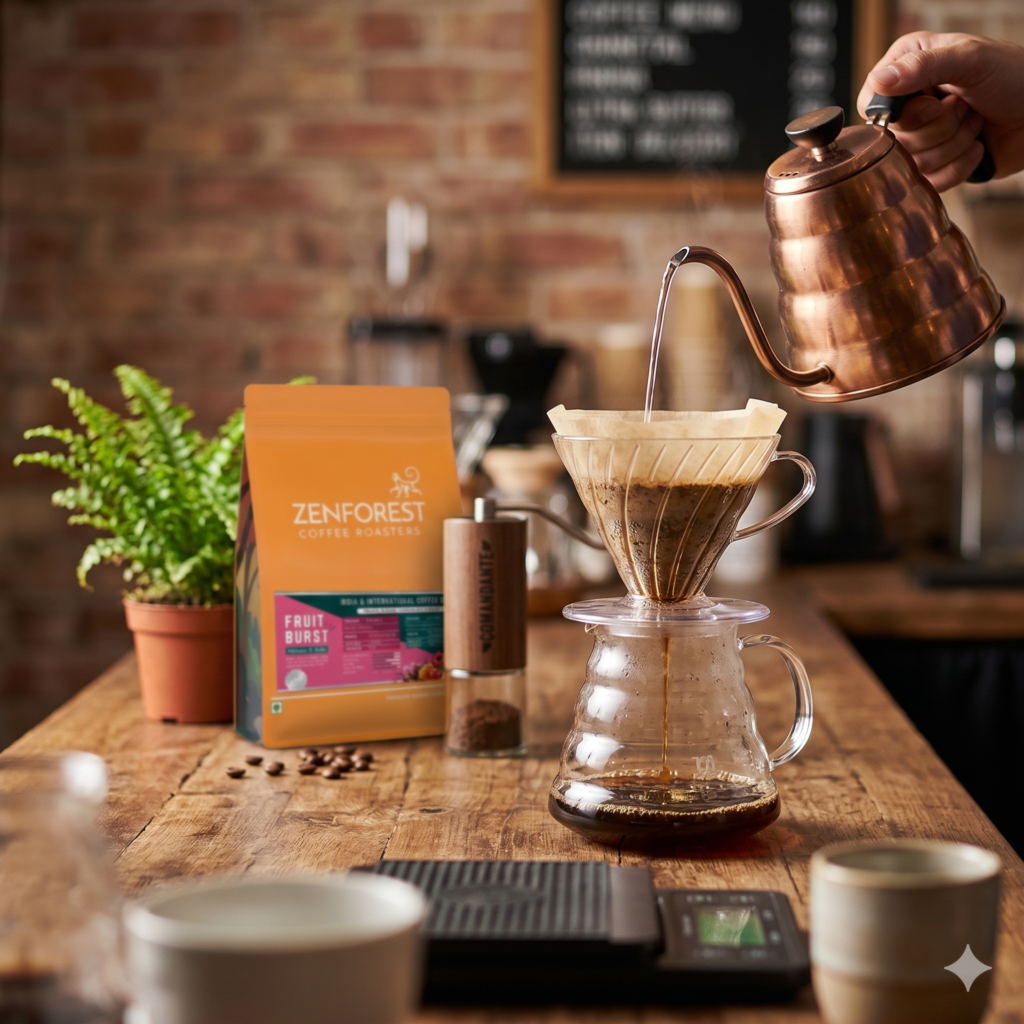
Specialty coffee refers to coffee scoring 80+ points on the Specialty Coffee Association scale, produced with exceptional care from farm to cup and roasted to highlight its natural flavours rather than hide defects. It’s more than a morning ritual — it’s a story, a craft, and a journey from farm to cup. At Zenforest Coffee Roasters, we live for that journey, and this guide walks through every part of it: how specialty coffee is graded, why it tastes the way it does, what happens between harvest and roasting, and how to brew it properly once it reaches your kitchen. Specialty Coffee in One Sentence Specialty coffee is coffee that scores 80 or more out of 100 on the Specialty Coffee Association’s grading scale, distinguished by traceable origins, minimal defects, distinct flavour notes, and careful handling at every stage from farm to cup. Key Takeaways Specialty Coffee scores above 80/100. Less than 5% of global coffee qualifies. Arabica dominates specialty coffee. Processing affects flavour. Fresh roasting matters. Brewing completes the journey. What’s in this guide What is Specialty Coffee? How Specialty Coffee is Graded Commodity Coffee vs Specialty Coffee Why Specialty Coffee Matters The Journey From Farm to Cup Coffee Processing Coffee Roasting & Roast Levels Freshness Grind Size Water Brewing Ratio Common Beginner Mistakes How to Choose Your First Specialty Coffee Why Indian Specialty Coffee is Growing Common Myths Frequently Asked Questions Continue Learning What is Specialty Coffee? Specialty coffee is a term used to describe beans that receive a score of 80 points or more out of 100 by certified graders — meaning very high quality, minimal defects, and distinct, pleasing flavour. It distinguishes itself from mass-produced, commodity coffees in the attention paid to every stage of the process: farming, processing, roasting, and brewing. The SCA Definition The Specialty Coffee Association (SCA) formalized the grading framework that the entire industry now uses, setting strict thresholds for defects, moisture content, and screen size alongside the all-important cupping score. Q Graders Coffee is scored by Q Graders — cuppers certified through the Coffee Quality Institute who are trained to evaluate beans against a standardized sensory rubric, ensuring a score from one lab is comparable to a score from another anywhere in the world. The 100-Point System Every lot is evaluated across multiple sensory categories on a 100-point cupping form, with the final score determining not just whether a coffee qualifies as specialty, but roughly how exceptional it is within that category. Why 80 Points Matters Eighty is the hard cutoff: anything below it is, by definition, not specialty coffee, regardless of how it’s marketed. Coffee scoring in the 80s is considered good specialty, the 85+ range is excellent, and anything above 90 is considered exceptional and increasingly rare. Some key features of specialty coffee include traceability and transparency — you often know the exact farm, region, altitude, and processing style — along with distinct flavour notes like fruity, floral, chocolatey, nutty, or winey nuances that depend entirely on origin and microclimate, smaller batches with careful roasting tailored to bring out natural sweetness, and a deep structural emphasis on sustainability and fair practices with growers. Quick Fact: Less than 5% of global coffee production qualifies as specialty grade — making it a genuinely small, carefully cultivated slice of everything grown worldwide. New to Specialty Grading? Before beans ever reach a roaster, their botanical species dictates their baseline complexity. Explore our breakdown on Arabica vs Robusta Coffee to understand why the specialty coffee world is so deeply focused on high-elevation cultivation. Read the Species Guide → How Specialty Coffee is Graded Grading happens through a process called cupping, where Q Graders brew multiple samples of the same coffee under tightly controlled conditions and score it across eight core categories. 1Defects 2Fragrance 3Acidity 4Sweetness 5Balance 6Aftertaste 7Body 8Uniformity Defects Even a single primary defect — a black bean, an insect-damaged bean, mold — can disqualify a lot from specialty grading entirely, which is why meticulous hand-sorting happens long before beans ever reach a roaster. Fragrance & Aroma Graders evaluate the dry grounds’ fragrance and then the aroma released once hot water hits the grounds, both of which hint at the volatile compounds that will carry through into flavour. Acidity Not sourness — acidity in cupping refers to a bright, lively quality that gives a coffee structure and liveliness, prized when it’s clean and well-defined rather than harsh. Sweetness Natural sugars developed during ripening and processing show up here, with higher-scoring coffees displaying a clear, pleasant sweetness rather than flatness. Balance This measures how well acidity, sweetness, and body work together, rather than any one quality overwhelming the others. Aftertaste The flavour and quality that lingers after swallowing — a long, pleasant aftertaste scores significantly higher than a short or unpleasant one. Body The weight and texture of the coffee on the palate, ranging from light and tea-like to thick and syrupy depending on variety and processing. Uniformity & Overall Uniformity checks that every cup of the same sample tastes consistent, while the overall score captures the cupper’s holistic impression of the coffee’s quality and character. Commodity Coffee vs Specialty Coffee Commodity Specialty Mixed origins Single origin Mass roasted Fresh roasted Unknown farm Traceable Dark roast Origin focused Defects allowed Minimal defects Low price Premium Commodity coffee is traded largely as an undifferentiated bulk product, blended from many farms and roasted dark to mask inconsistency. Specialty coffee flips every part of that model — origin, freshness, and traceability become the point rather than something to hide. Why Specialty Coffee Matters Making the switch away from commercial, factory-roasted coffee shifts your morning completely. Better for Farmers Purchasing high-grade coffee directly encourages premium payments to small-scale producers, funding ecological farming practices, fair wages, and long-term land care that commodity pricing simply doesn’t support. Better for the Environment Specialty-focused farms are far more likely to use shade-grown cultivation, minimal chemical inputs, and biodiversity-friendly practices, since quality and ecological care tend to go hand in hand at this