


Why India’s Rainforest-Grown Coffee is the Exclusive Specialty Coffee?
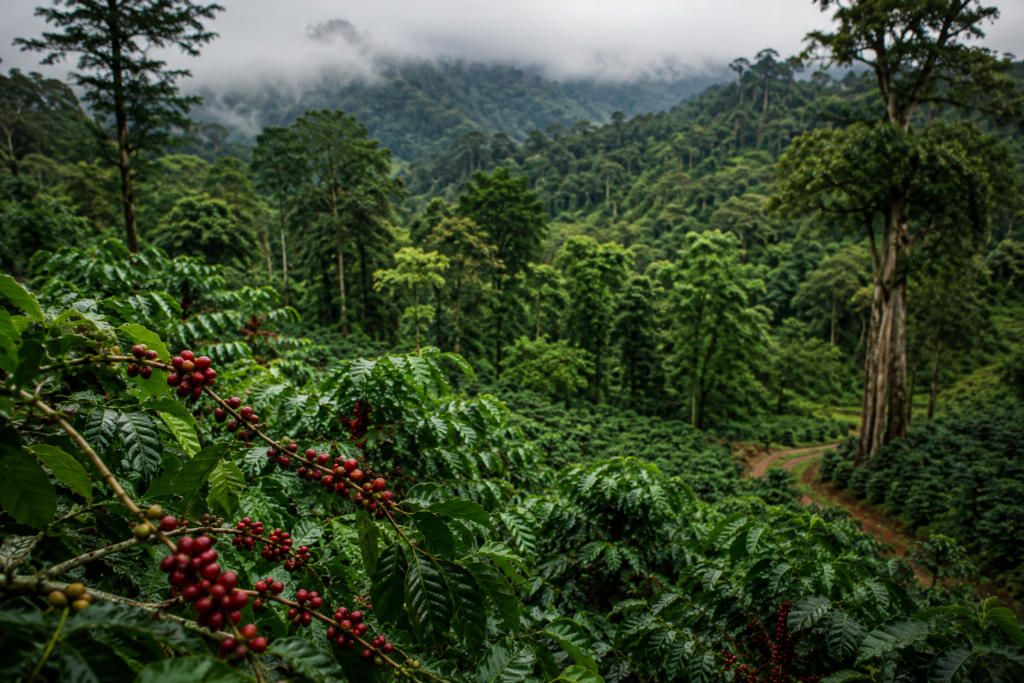
Most of the world’s coffee is grown in open fields under direct sunlight, harvested as quickly as possible, and shipped as efficiently as possible. The coffee growing in India’s Western Ghats works on an entirely different logic. Here, coffee grows in the shade of a dense forest canopy — native trees that were never cleared, biodiversity that was never disrupted, and an ecosystem in which coffee plants are a guest rather than a monoculture. The result is a coffee that tastes demonstrably different: slower to ripen, lower in acidity, more complex in body, and carrying flavour characteristics that can only be traced back to the particular interaction of altitude, rainfall, shade, and soil that define this specific stretch of land. At Zenforest, every coffee in our range begins here — in the rainforest-shaded estates of Chikkamagaluru and Coorg. Understanding how that environment shapes the bean is the clearest way to understand what makes Indian specialty coffee worth paying attention to. Quick Answer Specialty coffee from India’s Western Ghats rainforests is shade-grown under native forest canopies in one of the world’s highest-rainfall regions. This combination — dense tree cover, volcanic soil, high altitude, and slow cherry ripening — produces beans with lower acidity, greater sweetness, heavier body, and more complex flavour than open-field coffee. Indian rainforest coffee is also inherently sustainable: the farming method preserves the forest ecosystem rather than replacing it. Key Takeaways Indian rainforest coffee is shade-grown under native trees — the forest was never cleared for cultivation. The Western Ghats is a global biodiversity hotspot and one of the world’s highest-rainfall regions. Slow cherry ripening under shade produces more complex, sweeter, lower-acid beans. Shade-grown methods are sustainable by default — no deforestation, minimal chemical inputs. Processing methods like monsooning and fermentation add further layers of character. The EU Deforestation Regulation (EUDR) is increasing traceability and transparency in Indian coffee supply chains. What’s in this guide What is Indian Rainforest Coffee? The Western Ghats: Where This Coffee Grows How Shade-Grown Coffee Works Special Characteristics of Rainforest Coffee How the Rainforest Shapes Flavour Sustainability and EUDR Zenforest’s Processing Methods Indian Rainforest Coffee vs Other Origins How to Brew It Who Should Try It? Common Mistakes FAQs Continue Learning What is Indian Rainforest Coffee? Indian rainforest coffee refers to specialty-grade coffee cultivated within or alongside the native forests of India’s Western Ghats, grown under natural tree canopies rather than in cleared, open-field plantations. The defining characteristic is the relationship between the coffee plant and the surrounding forest — in the Western Ghats, that forest was never removed to make way for agriculture. Coffee was planted into an existing ecosystem, and the ecosystem has remained largely intact around it for generations. This makes Indian shade-grown coffee fundamentally different from most of the world’s coffee, which is typically grown as a monoculture in sun-exposed rows optimised for yield and efficiency. The shade-grown approach sacrifices some of that efficiency in exchange for something more valuable — environmental complexity that translates directly into the flavour of the bean. Not Just a Marketing Term Shade-grown and rainforest-grown are sometimes used loosely in coffee marketing, but in the Western Ghats context they describe something specific and verifiable. These estates are situated inside or adjacent to one of the world’s eight recognised biodiversity hotspots. The shade canopy isn’t a few planted trees added for show — it’s native forest cover that predates the coffee cultivation by centuries. That distinction matters both environmentally and for the cup. The Western Ghats: Where This Coffee Grows The Western Ghats is a mountain range running roughly 1,600 kilometres down the western edge of the Indian subcontinent, forming a continuous escarpment from Gujarat in the north to Kerala in the south. It is recognised by UNESCO as a World Heritage Site and by Conservation International as one of the world’s eight hottest biodiversity hotspots — a designation given to regions with exceptional concentrations of endemic species facing significant habitat threat. Chikkamagaluru and Coorg The two regions most associated with premium Indian coffee — Chikkamagaluru (also spelled Chikmagalur) and Coorg (Kodagu) — both sit within the Western Ghats at elevations ranging from roughly 900m to over 1,500m above sea level. Both receive substantial annual rainfall from the southwest monsoon, with some estates recording among the highest rainfall totals in the world during the June to September monsoon season. It’s this combination of high altitude, dense canopy, and exceptional rainfall that defines the growing environment for Indian rainforest coffee. Learn more about each region in our full Indian Coffee Regions guide. Altitude and Its Effect on the Bean As with coffee-growing regions globally, altitude has a significant effect on bean development in the Western Ghats. Higher altitudes mean cooler temperatures, slower cherry ripening, and more time for sugars and aromatic compounds to develop within the bean. This is part of the reason Indian rainforest coffees tend toward sweetness and body rather than sharp brightness — the slow-ripening environment builds density and complexity rather than the high acidity typical of faster-ripening, lower-altitude lots. See our full breakdown in the Arabica vs Robusta guide for how variety interacts with these growing conditions. How Shade-Grown Coffee Works In conventional open-field coffee farming, trees are cleared to maximise sunlight exposure, which accelerates cherry ripening and increases yield per hectare. The trade-off is a faster, simpler flavour profile and a significant environmental cost — cleared land, disrupted watersheds, and eliminated habitat. Shade-grown farming keeps that tree canopy intact and uses it deliberately. The coffee plants grow in the filtered light beneath, which has several important effects. Temperature Regulation The canopy keeps soil and air temperatures lower and more stable than open fields, reducing heat stress on the coffee plants and slowing the overall rate of cherry development. This is the foundational mechanism behind shade-grown coffee’s flavour advantages. Moisture Retention Tree cover reduces direct rainfall impact on soil, slowing erosion and helping maintain moisture levels more consistently through dry periods. In a region as rainfall-heavy as the Western Ghats, this
The Ultimate Coffee Showdown: Single Origin Coffee vs. Single Estate – What’s Truly Better?
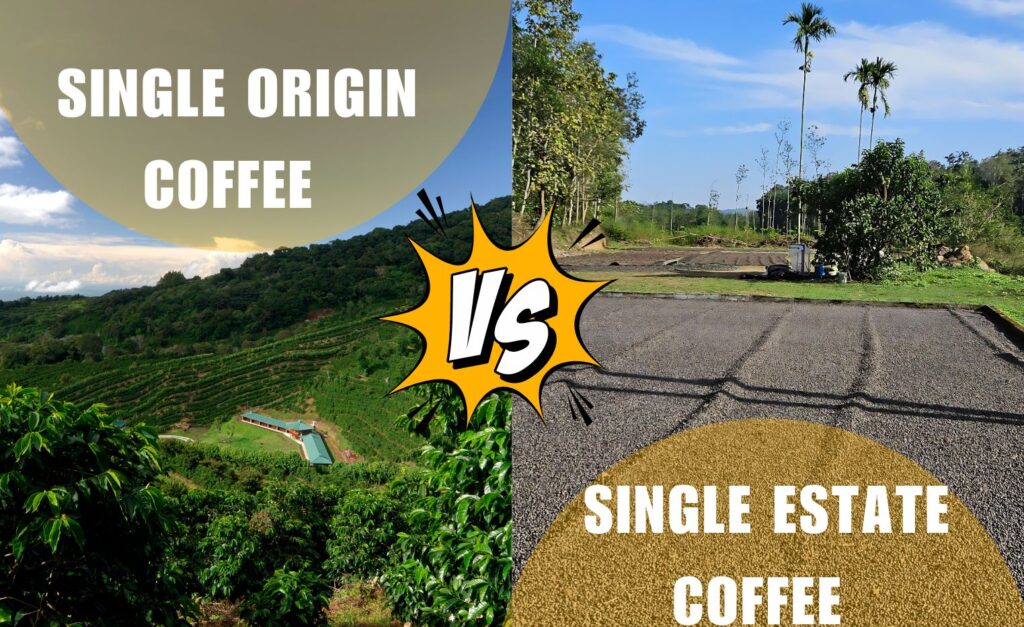
With the rise of specialty coffee in India, terms like “single origin” and “single estate” are appearing on more and more bags — and creating more and more confusion. Are they the same thing? Does single origin mean it came from one farm? And does estate-labelled coffee automatically mean higher quality? The short answer: not quite. Single origin is about geography — about where a coffee’s environmental character comes from. Single estate is a more specific claim about which farm the beans came from. All single-estate coffee is single origin, but a great deal of excellent single-origin coffee comes from cooperatives, small farms, and regions — not branded estates. Understanding the difference changes how you shop, how you taste, and how you think about what’s actually in your cup. Quick Answer Single origin coffee means the beans come from one specific geographic source — a country, region, cooperative, or farm — rather than a blend of multiple origins. Single estate coffee is more specific: it means beans from one named farm or plantation. All single-estate coffee is single origin, but not all single-origin coffee is from a single estate. Many exceptional coffees come from small farms or cooperatives that don’t have a recognisable estate name. Key Takeaways Single origin refers to geographic traceability — country, region, cooperative, or farm. Single estate is a specific subset: one named farm or plantation. Over 90% of Indian coffee farmers own fewer than 10 acres — most great Indian coffee doesn’t come from large estates. Environmental factors — altitude, shade, soil, rainfall — often matter more to flavour than estate name. At Zenforest, we define single origin by the environmental character of the region, not the size of the operation. The term “single origin” is used differently by different roasters — reading the label carefully matters. What’s in this guide The Rise of Specialty Coffee in India What Does Single Origin Really Mean? Global Examples of Single Origin Coffee Single Origin vs Single Estate in India Why Estate Isn’t the Only Path to Quality Environmental Factors That Shape Coffee How Altitude and Terroir Build Flavour How Processing Affects Single Origin Character How to Read a Single Origin Label The Zenforest Approach Our Single Origin Collection Common Mistakes Continue Learning Recommended Coffees Learn More FAQs The Rise of Specialty Coffee in India Over the past decade, the Indian coffee market has seen a remarkable shift toward specialty coffee. More consumers are becoming interested in the story behind each cup — where it was grown, who grew it, how it was processed, and what it should taste like. This has driven a growing focus on single-origin beans, with roasters and cafés using origin as a key way to communicate quality and distinctiveness. But even as single-origin coffee gains traction, there’s still significant confusion about what the term actually means. Many people assume it refers to a single farm or estate. The truth is more nuanced — and understanding it opens up a much larger range of excellent coffees than the “estate-only” framing would suggest. The Golden Rule: While all single-estate coffees are naturally single origin, not all single-origin coffees come from a single estate — and the distinction matters more than you might think when shopping for Indian specialty coffee. What Does Single Origin Coffee Really Mean? In the world of coffee, “single origin” can refer to a range of geographic scales — and this is where most of the confusion begins. At its broadest, it simply means the coffee comes from one identifiable source rather than being blended across multiple countries or unrelated regions. That source could be: A country — e.g., Ethiopian coffee, Indian coffee A region — e.g., Coorg, Chikmagalur, Araku Valley A cooperative — a collective of small farmers in the same area who pool processing resources A single farm or estate — the most specific form, where all beans are traceable to one plot The primary purpose of the single-origin designation is to communicate that the coffee’s flavour is shaped by one specific growing environment — altitude, soil, shade canopy, climate, and cultivation practices — rather than being averaged across diverse origins as blending would do. It’s about the connection between the bean and its place, and what that place contributes to the cup’s character. Global Examples of Single Origin Coffee Single origin is defined differently across major producing countries, and seeing how other origins use the term helps clarify what it actually means in practice. Country-Based Single Origin Ethiopian Yirgacheffe coffee, known for its bright fruity and floral notes, is often sold as single origin at the country or regional level. The designation “Ethiopian Yirgacheffe” tells you the environmental conditions and traditional growing context — it doesn’t necessarily tell you which specific farm the beans came from. Region-Based Single Origin Colombian Huila coffee is another clear example — beans sourced from the Huila region, highlighting the specific geographic area’s influence on bright acidity and caramel sweetness. Many Colombian single-origin coffees are pooled from cooperatives of dozens of small farms within the same region, not from single named estates. Farm-Based Single Origin In Kenya, many coffees are labelled by specific farm or cooperative — coffee from Nyeri region farms, for example, is often prized for its berry-like acidity and depth, with individual farms named to communicate microlot provenance to buyers. These examples confirm that “origin” can mean country, region, or estate — with each level of specificity providing its own useful information about the cup. None is inherently superior to the others; what matters is what the label actually tells you about what shaped the flavour. Single Origin vs Single Estate Coffee in India In India, the two terms are often used interchangeably, which causes most of the confusion. Here’s the clearest way to think about the distinction: Term What It Means Example Single Origin Traceable to one geographic source — could be country, region, coop, or farm “Coorg Coffee” — sourced from Coorg district Single Estate Traceable to one