

French Press: A Brewing Guide
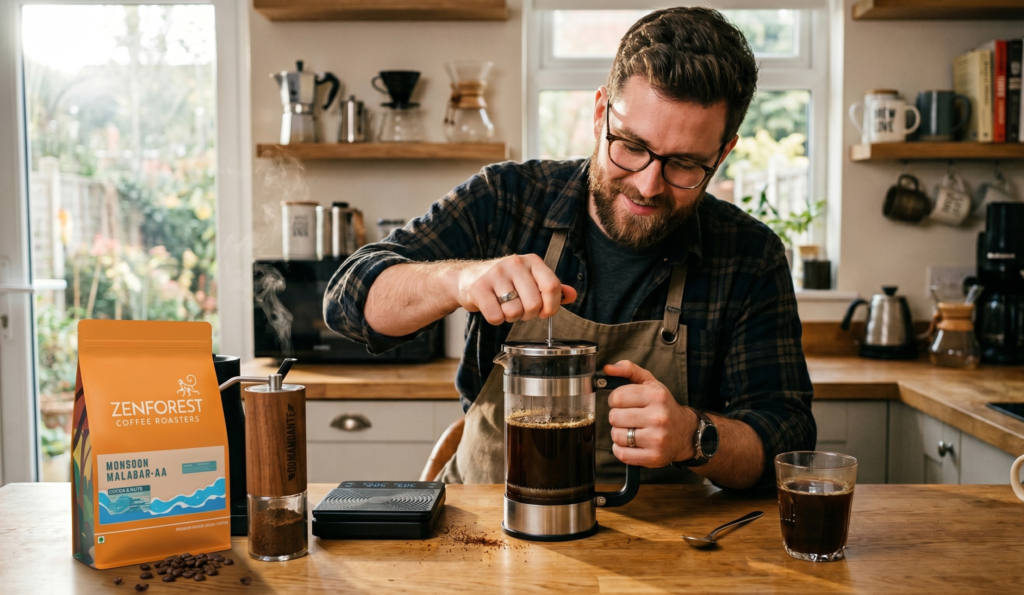
French Press remains one of the most popular brewing methods among coffee enthusiasts because it produces a rich, full-bodied cup that highlights the natural oils and flavours of the coffee bean. Unlike paper-filter brewing methods, French Press allows more of the coffee’s natural character to reach your cup, making coffee selection especially important. In this guide, we’ll explore how to choose the best coffee for French Press and which coffees deliver the most satisfying results. Why Coffee Choice Matters in French Press French Press brewing uses full immersion extraction, where coffee grounds remain in contact with water for several minutes before being separated using a metal filter. Because no paper filter removes oils and microscopic particles, the resulting cup often tastes fuller-bodied, richer in texture, more aromatic, and significantly more flavour-forward. This makes bean selection one of the most important factors in achieving an excellent brew. What Roast Level Works Best? While personal preference always matters, medium to medium-dark roasts generally perform exceptionally well in French Press. These coffees typically provide chocolate notes, nutty sweetness, caramel complexity, and a rich mouthfeel. Very light roasts can sometimes taste overly acidic or tea-like in immersion brewing, while extremely dark roasts may produce excessive bitterness. Best Coffee Characteristics for French Press When choosing coffee for French Press, look for beans that offer: Full Body: Coffees with naturally heavier body create a more satisfying cup. Lower Acidity: Medium and low-acid coffees often produce balanced, approachable brews. Chocolate & Nut Notes: These flavours tend to shine particularly well in immersion brewing. Complex Sweetness: Natural sweetness becomes more pronounced due to longer extraction times. Our Recommended Coffees for French Press Monsoon Malabar AA Monsoon Malabar is one of India’s most distinctive coffees. Its low acidity, heavy body, and notes of cocoa, nuts, and malt make it exceptionally well suited for French Press brewing. The immersion process enhances its earthy sweetness while creating an incredibly smooth cup. It is best for rich body lovers, traditional coffee drinkers, and low-acid coffee enthusiasts. Want to dive deeper? Read our comprehensive feature, What Is Monsoon Malabar Coffee? India’s Most Unique Coffee Explained, to discover how coastal winds shape this incredible bean. Mathavara Estate This naturally processed Chikmagalur coffee offers deep cocoa notes, berry sweetness, and a smooth finish. French Press extraction highlights its layered flavour profile while maintaining excellent balance. It is best for daily brewing, balanced sweetness, and medium-bodied cups. Rum Barrel Aged Coffee Rum Barrel Aged Coffee develops unique depth through barrel ageing. French Press brewing amplifies its molasses, oak, spice, and chocolate notes, creating an indulgent coffee experience. It is best for specialty coffee enthusiasts, experimental flavour seekers, and rich after-dinner coffee. Cinnamon Fermented X Bourbon Bliss This distinctive blend combines warming spice notes with sweetness and complexity. The French Press method enhances its layered flavour profile and rich mouthfeel. It is best for adventurous coffee drinkers, spice-forward flavour profiles, and unique brewing experiences. Learn More About Coffee Origins Curious about how different coffees develop their unique flavour profiles? Explore our guide on Single Origin vs Single Estate Coffee and discover how growing conditions, terroir, and processing shape every cup. Read the Guide → Choosing the Correct Grind Size Grind size is just as important as bean selection. For French Press, you should always target a coarse grind and strictly avoid a fine espresso grind or a medium-fine pour-over grind. A coarse grind reduces sediment, keeps your cup clean, and helps achieve a balanced extraction. The texture should ideally resemble coarse sea salt. Recommended Brewing Recipe Element Measurement / Target Coffee 30g Water 500ml Water Temperature 93–95°C Brew Time 4 minutes Step-by-Step Method Add your coarse ground coffee to the glass carafe. Pour your hot water evenly, making sure all the grounds are saturated. Stir gently to break up any dry clumps. Place the plunger on top without pressing down. Wait patiently for 4 minutes. Press the plunger down slowly and with even pressure. Serve immediately into your favorite mug to prevent over-extraction. Common French Press Mistakes Grinding Too Fine: Creates unpleasantly bitter flavors and leaves excessive muddy sediment at the bottom of your cup. Brewing Too Long: Can quickly lead to over-extraction, generating harsh, dry, or astringent notes. Using Boiling Water: Water right off the boil may scald delicate flavor compounds, leaving the brew tasting flat. Leaving Coffee in the Press: Leaving liquid in the carafe after pressing continues active extraction and will negatively ruin the remaining flavor. Frequently Asked Questions Is French Press stronger than pour-over? French Press generally produces a fuller-bodied cup with greater texture and heavy mouthfeel due to retained oils, though overall caffeine levels are usually very similar to a pour-over. Can I use specialty coffee in French Press? Absolutely. French Press is actually one of the absolute best methods for showcasing distinct specialty coffee characteristics and natural bean oils. Which Zenforest coffee is best for French Press? Monsoon Malabar AA is often the most popular choice among our community due to its rich body, naturally low acidity, and chocolate-forward profile. Try Monsoon Malabar AA Experience one of India’s most iconic coffees, perfectly suited for French Press brewing with rich cocoa notes, smooth body, and exceptionally low acidity. Shop Monsoon Malabar AA →
Rum Barrel Aged Coffee: Everything You Need to Know
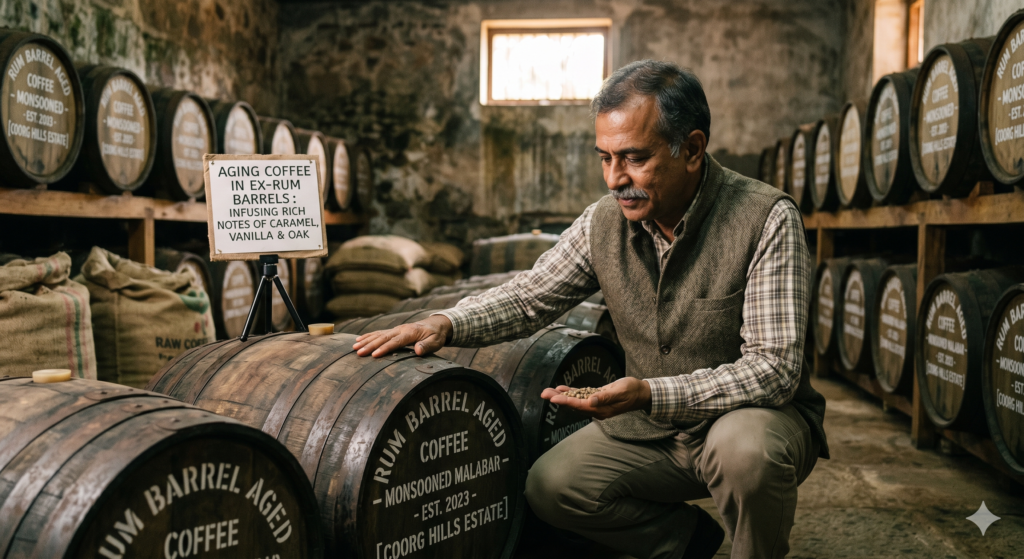
Few coffees stop people in their tracks the way Rum Barrel Aged Coffee does — and it’s not just the name. Barrel ageing is one of the most labour-intensive, time-sensitive processing experiments in specialty coffee today, borrowing a centuries-old technique from the spirits world and applying it to green coffee beans with genuinely extraordinary results. The beans spend weeks absorbing aromatic compounds from oak staves still coated in rum residue, emerging transformed — heavier, more complex, and carrying flavour dimensions no roast profile alone could ever create. At Zenforest, our Rum Barrel Aged Coffee is crafted from premium Indian Arabica, sourced from the same high-altitude growing regions we use across our specialty range, then carefully aged in authentic rum barrels before roasting. The result is a cup that carries the clarity of well-grown Indian coffee alongside deep notes of oak, molasses, dark chocolate, and warm spice — a genuinely different kind of specialty experience. Quick Answer Rum Barrel Aged Coffee is specialty coffee that has been aged inside barrels previously used for maturing rum, allowing the green beans to absorb oak and spirit-derived aromatic compounds before roasting. It contains no alcohol — the roasting process eliminates any residual content — and delivers a rich, layered cup with notes of oak, molasses, dark chocolate, caramel, and warm spice. Key Takeaways Rum Barrel Aged Coffee contains no alcohol — roasting eliminates any residue. Flavour comes from oak and rum-derived aromatic compounds, not added flavouring. The ageing happens before roasting, at the green bean stage. It suits French press, espresso, moka pot, and works well with milk. It’s one of the most complex experimental coffees in the Zenforest range. What’s in this guide What is Rum Barrel Aged Coffee? How is it Made? Does it Contain Alcohol? What Does it Taste Like? Rum Barrel Aged vs Regular Coffee Rum vs Other Barrel Types Why Do Roasters Use Barrels? The Coffee Behind the Barrel How Roasting Changes Barrel-Aged Coffee Best Brewing Methods Rum Barrel Coffee with Milk Who Should Try It? Common Mistakes FAQs Continue Learning What is Rum Barrel Aged Coffee? Rum Barrel Aged Coffee is specialty coffee — typically green, unroasted beans — that has been placed inside barrels previously used to mature rum and allowed to rest there for an extended period under controlled conditions. During that resting phase, the beans slowly absorb aromatic compounds from the oak wood and the rum residue that saturates the staves, developing flavour characteristics that exist nowhere else in the coffee world. The process sits firmly within the broader category of experimental coffee processing, a movement that has reshaped what specialty coffee can taste like over the past decade. Like Monsoon Malabar — which exposes beans to seasonal ocean winds — barrel ageing is another form of post-harvest, pre-roast intervention that uses an environmental influence to shape the bean’s final flavour profile in ways that growing conditions and roasting alone cannot replicate. How is it Different From Flavoured Coffee? This is an important distinction. Rum Barrel Aged Coffee is not flavoured coffee — no extracts, syrups, or artificial compounds are added at any stage. The flavour development happens entirely through absorption of naturally occurring compounds from the barrel itself. This puts it in the same category as wine aged in oak, whisky matured in sherry casks, or any other spirit whose character is shaped by the vessel it rests in — a process driven entirely by chemistry and time, not additives. Where Does Barrel Ageing Fit in Specialty Coffee? Barrel ageing belongs to the experimental processing movement that has produced techniques like anaerobic fermentation, carbonic maceration, and cinnamon fermentation. What distinguishes barrel ageing from those methods is that the flavour influence comes almost entirely from outside the coffee’s own fruit chemistry — from an external vessel with its own deep aromatic history. That external influence is precisely what gives barrel-aged coffees such a distinctive and immediately recognisable character. How is Rum Barrel Aged Coffee Made? The process is straightforward in principle and demanding in practice. Every stage requires careful judgment about timing, conditions, and the condition of both the beans and the barrels being used. Sourcing the Beans It starts with high-quality green coffee. Barrel ageing amplifies and transforms existing flavour characteristics — it doesn’t create quality from poor raw material. The same considerations that matter for any specialty coffee apply here: origin, altitude, variety, and processing method before ageing all shape the final result. At Zenforest, we use high-altitude Indian Arabica from the same growing regions behind our other single-origin coffees. Selecting the Barrels Not all rum barrels produce the same result. The type of rum matured in the barrel — white, dark, spiced — its age, how heavily it was charred, and how much residual spirit remains all contribute differently. Barrels from aged dark rum tend to produce the deepest, most complex coffee character, with heavier molasses, oak, and dried fruit influence. The Ageing Process Green beans are loaded into the barrels, sealed, and stored in controlled conditions for a period that typically runs from several weeks to a few months. Temperature, humidity, and airflow all matter during this period — the same variables that matter during coffee storage more generally, but here working actively to shape flavour rather than preserve it. The beans gradually absorb volatile aromatic compounds from the wood and residual rum, while the barrel’s porosity allows a slow exchange with the surrounding air. Roasting After Ageing Once ageing is complete, the beans are roasted. This is where the transformation is locked in — the roast develops the coffee’s inherent character while integrating the barrel-derived compounds into a unified flavour profile. Roasting barrel-aged beans requires adjustment compared to unaged lots, since the moisture content and density have changed during the ageing period. Roast level also has a significant bearing on the final character, as discussed in more detail below. Did you know? During roasting, any residual alcohol absorbed by the beans is completely evaporated by the high heat —
Monsoon Malabar Coffee: India’s Most Unique Coffee Explained
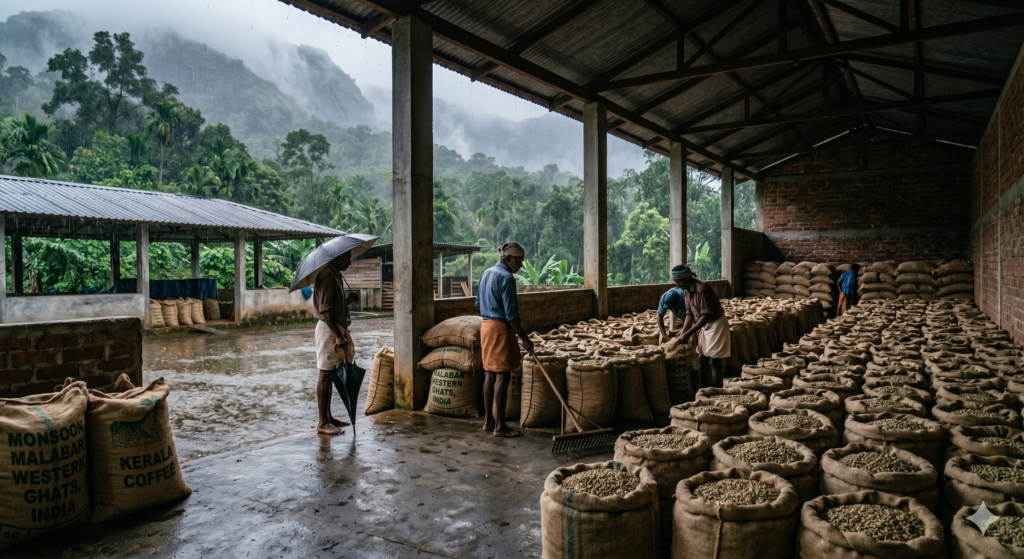
Monsoon Malabar Coffee, a unique specialty from India, is known for its low acidity, rich body, and earthy flavors. This coffee undergoes a distinctive ageing process, where green beans are exposed to humid monsoon winds, enhancing their characteristics. Ideal for low-acid coffee lovers, it offers a deeply satisfying experience.
Roast Level: Light or Medium or Dark?
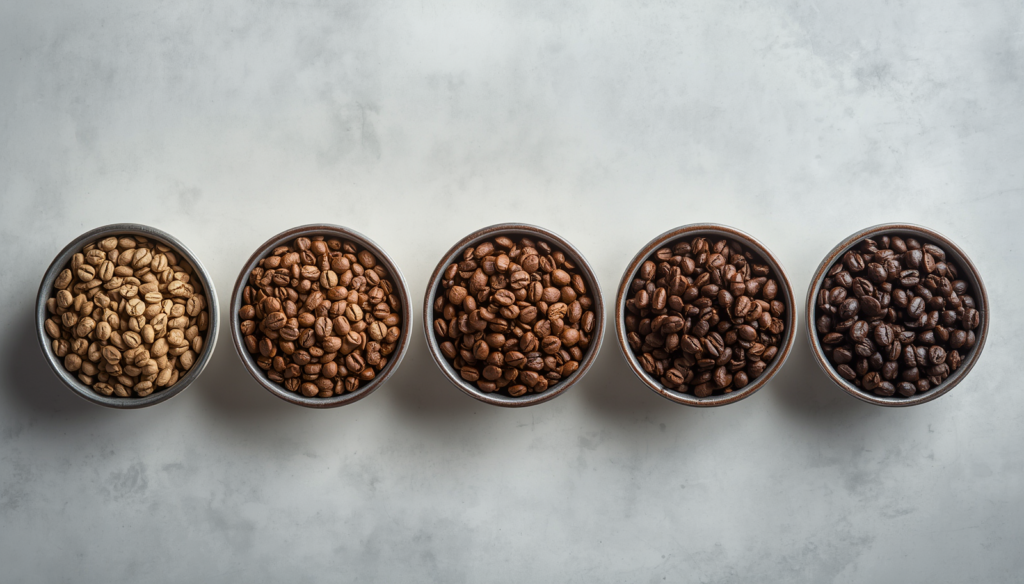
Roast Level – Understand light vs medium vs dark roast coffee — how each level changes flavour, body, and acidity, and which roast suits your brewing method best.
What is Specialty Coffee? Complete Guide to Indian Specialty Coffee

Specialty coffee has evolved far beyond being just a high-grade bean. It’s a dynamic blend of quality, craftsmanship, and a deep appreciation of the journey from farm to cup. Whether you’re a seasoned coffee aficionado or a curious newcomer, this guide covers everything you need to know — what specialty coffee actually means, how it’s graded, how it’s processed and roasted, where India’s best beans come from, and how to choose the right cup for you. What’s in this guide What is Specialty Coffee? How is Specialty Coffee Graded? Commercial vs Specialty Coffee Coffee Processing Methods Roasting: Light, Medium & Dark Indian Specialty Coffee Regions How to Choose Your Coffee Frequently Asked Questions What Exactly is Specialty Coffee? The term “specialty coffee” is both specific and expansive. Technically, it refers to coffee beans that score 80 points or more on a 100-point scale. This scale evaluates several attributes including acidity, sweetness, aroma, and overall character. Coffee that reaches this score is distinguished from regular, commercial coffee, known in the industry as commodity coffee. The 80+ Point Scale: Much like the grading systems used for premium wines and spirits, specialty coffee is rigorously evaluated by certified Q-Graders. Any score below 80 falls into the commercial commodity market, while scores above 80 unlock the title of “Specialty.” Quality and Market Value The high score reflects a superior quality that often translates into a higher market price. But there’s more to specialty coffee than just numbers. It encompasses a variety of high-quality beans and roasting techniques that highlight unique flavors and profiles, much different from mass-produced versions. The Misunderstood Price of Specialty Coffee One common misconception is that specialty coffee is excessively pricey. However, when you consider the meticulous process involved in producing a single pound of specialty coffee, the pricing begins to make sense. From the selection of coffee varieties that produce smaller yields, intense labor requirements, and the extensive education needed for proper processing, every step involves a significant amount of effort and resources — not to mention the loss during sorting and filtering out defects. Value Beyond Price Considering the journey of coffee — from being handpicked by farmers thousands of miles away, through meticulous processing, to roasting and brewing — it’s astonishing that we can enjoy such an intricate beverage for a few dollars. The idea isn’t just to justify the cost but to appreciate the industry and the complex process behind your daily brew. How is Specialty Coffee Graded? The SCA Scoring System Every batch of specialty coffee is cupped and scored by certified Q-Graders using the Specialty Coffee Association (SCA) protocol. The final number isn’t a marketing label — it’s a structured evaluation of aroma, flavor, aftertaste, acidity, body, balance, and uniformity. Here’s what the bands actually mean in your cup: Score Range Classification What It Means in the Cup Below 80 Commercial / Commodity Acceptable but unremarkable; flat or inconsistent flavor, often blended at scale. 80–84.99 Specialty (Very Good) Clean, sweet, with clear acidity and a defined flavor profile. 85–89.99 Specialty (Excellent) Distinct, layered flavor notes — fruit, floral, or chocolate complexity with a memorable finish. 90 and above Specialty (Outstanding) Rare, exceptional lots with extraordinary clarity, sweetness, and depth — often single-estate, limited harvest coffees. The 80-point threshold is the widely accepted, industry-standard definition of specialty coffee. Anything scoring above it has earned its place through repeatable quality, not just a good harvest year. Commercial vs Specialty Coffee: What’s the Real Difference? This is the question most people are actually trying to answer when they search for “what is specialty coffee.” Here’s a side-by-side comparison: Factor Commercial Coffee Specialty Coffee SCA Score Below 80 80 and above Sourcing Mass-blended, often multiple origins Traceable to a single farm, estate, or cooperative Defect Tolerance Higher tolerance for defective beans Strict sorting; defective beans are removed Harvesting Mechanically stripped Often hand-picked, selecting only ripe cherries Roasting Roasted for volume and shelf life Roasted to highlight the bean’s specific flavor profile Flavor Profile Generic, often bitter or flat Distinct notes — fruity, floral, nutty, or chocolatey Farmer Compensation Commodity market pricing Premium pricing, often direct trade The gap isn’t just about taste — it’s a difference in how the coffee is grown, picked, processed, and paid for at every step of the supply chain. Coffee Processing Methods Explained Processing is what happens to a coffee cherry between picking and drying, and it has an enormous impact on the final flavor — arguably as much as the variety or roast itself. Washed Process The fruit (mucilage) is removed before drying, resulting in a clean, bright cup with pronounced acidity. This is the most common method for coffees where clarity of flavor is the goal. Natural Process The whole cherry is dried with the fruit intact, allowing sugars to ferment into the bean. This produces a heavier body with bold, fruity, sometimes wine-like notes. Honey Process A middle ground between washed and natural — some or all of the mucilage is left on during drying, producing a syrupy sweetness with moderate acidity. Anaerobic Fermentation Cherries are fermented in sealed, oxygen-free tanks before drying, creating intense, often experimental flavor profiles with notes of tropical fruit or even a light funk. Monsooned Process A method unique to India, where beans are exposed to monsoon winds and humidity over several weeks, mellowing acidity and creating a low-acid, full-bodied cup with earthy, spiced notes. Barrel Aged Green or processed beans are rested in spirit barrels (such as rum or whisky casks), absorbing subtle notes from the wood and previous contents for a distinctive, limited-edition cup. Curious About the Honey Process? Honey-processed coffees sit in a flavor sweet spot between washed and natural — read our deep dive to understand the grades (white, yellow, red, and black honey) and how to brew them. Read the Honey Process Guide → Roast Levels: Light, Medium, and Dark Roasting transforms green coffee into the aromatic bean you grind at home, and the degree of roast shapes both flavor