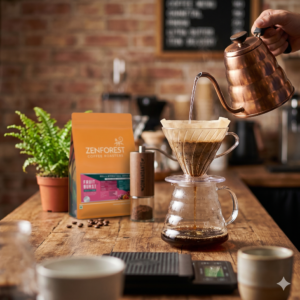

Body is the part of coffee tasting that's easiest to feel and hardest to describe in words. It's the weight and texture of a coffee on your tongue — the difference between something that feels light and tea-like and something that feels thick and syrupy. Understanding body helps you choose coffees that match not just the flavour you want, but the physical sensation you want in your mouth.
Quick Answer
Coffee body refers to the weight, thickness, and texture of a coffee in the mouth, ranging from light and tea-like to heavy and syrupy. It's shaped primarily by processing method, roast level, and brewing method — natural and dark-roasted coffees tend to have the heaviest body.
Light Body
Light-bodied coffees feel delicate and tea-like on the palate, with little perceived weight or coating sensation. Washed, light-roasted coffees brewed via pour-over typically sit at this end of the spectrum.

Medium Body
Medium body feels rounder and more substantial without becoming heavy — a comfortable middle ground that most drinkers find familiar and approachable. Medium roasts and many honey-processed coffees tend to land here.
Heavy Body
Heavy-bodied coffees feel thick, syrupy, and coating, often lingering noticeably on the palate. Natural processing, dark roasting, and immersion brewing methods like French press all push body in this direction.
Mouthfeel
Mouthfeel is the broader sensory category body belongs to, covering texture qualities like silky, creamy, gritty, or oily. Oils suspended in the coffee — more present in darker roasts and unfiltered brew methods — contribute significantly to a fuller, creamier mouthfeel.
Examples by Method and Process
| Factor | Lighter Body | Heavier Body |
|---|---|---|
| Processing | Washed | Natural / Honey |
| Roast | Light | Dark |
| Brew Method | Pour-over (paper filter) | French Press / Espresso |
| Filter Type | Paper (traps oils) | Metal mesh (lets oils through) |
If you want to taste body in isolation, brew the same coffee two ways — once through a paper filter, once through a French press. The paper filter traps oils and fine particles, producing a noticeably lighter body from the exact same beans.
Common Mistakes
Continue Learning
Recommended Coffees
Full-Bodied Coffees
Learn More
Frequently Asked Questions
What gives coffee a heavy body?
Natural processing, darker roasting, and brewing methods that let oils and fine particles through (like French press) all build heavier body.
Is heavier body better?
Not necessarily — it's a style preference, not a quality marker. Light body can be just as well-made as heavy body.
Does grind size affect body?
Indirectly, yes — finer grinds extract more oils and fine particles in immersion brewing, which can increase perceived body.
Why does espresso feel heavier than pour-over?
Espresso's pressurized extraction pulls more oils and dissolved solids into a concentrated shot, creating a much fuller mouthfeel.
Can the same coffee have different body depending on brewing?
Yes — brew method has a major influence on body, sometimes more than the bean itself.
Body Shapes How a Coffee Feels, Not Just Tastes
Once you start paying attention to weight and texture alongside flavour, you'll notice body is one of the biggest reasons two coffees with similar flavour notes can feel completely different to drink. Experiment with brew methods to find the body that suits you best.
Explore More in the Coffee Academy
Every cup tells a story — keep learning, keep tasting, and keep exploring what makes specialty coffee worth the extra care.
Visit the Coffee Academy →