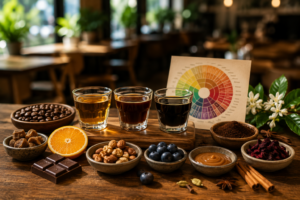

Acidity is one of the most misunderstood words in coffee. To most people, "acidic" sounds like a complaint — something sharp, sour, or unpleasant. In coffee tasting, it means almost the opposite: a bright, lively, structured quality that gives a cup its liveliness and definition. Understanding acidity is one of the fastest ways to start tasting coffee like a professional, and to stop mistaking a coffee's brightness for a flaw.
Quick Answer
Coffee acidity refers to the bright, tangy, lively sensation on the palate created by natural organic acids in the bean — citric, malic, phosphoric, and tartaric among them. Good acidity tastes crisp and juicy, not sour; it's a hallmark of high-altitude, well-processed specialty coffee.
What is Acidity?
In coffee, acidity describes a sensory quality, not a pH measurement you'd notice the way you would with lemon juice. It registers on the sides of the tongue and the roof of the mouth as a bright, crisp, almost sparkling sensation that gives the cup energy and structure.

| Acid Type | Flavor Character | Common Origins |
|---|---|---|
| Citric | Bright, citrus-like | High-altitude origins |
| Malic | Crisp, apple-like | Washed Central/South America |
| Phosphoric | Smooth, cola-like | East Africa (Kenya) |
| Tartaric | Winey, grape-like | Natural-processed lots |
Good vs Bad Acidity
The difference between good and bad acidity comes down to balance and integration, not intensity.
Good Acidity
Bright, crisp, juicy — feels lively and balanced against sweetness and body.
Bad Acidity
Sharp, sour, or vinegary — usually a sign of under-extraction or a roasting defect, not a quality trait.
How to Tell
Good acidity fades cleanly; bad acidity lingers unpleasantly and feels disconnected from the rest of the cup.
Citric Acid
Citric acid contributes bright, citrus-like notes — think orange or lemon — and is especially prominent in coffees grown at higher altitudes, where slower ripening allows more of it to develop.
Malic Acid
Malic acid brings a clean, apple-like brightness, often described as crisp or green-apple sweet, and is common in many washed Central and South American coffees.
Phosphoric Acid
Phosphoric acid produces a smooth, almost effervescent brightness reminiscent of cola or grapefruit, frequently associated with East African coffees, particularly from Kenya.
Tartaric Acid
Tartaric acid, the same acid found in grapes and wine, contributes a winey, slightly tannic brightness and shows up most distinctly in naturally processed and some experimentally fermented coffees.
How Roasting Changes Acidity
Acidity is at its peak in light roasts and steadily declines as roasting progresses. By the time a coffee reaches dark roast, most of its organic acid structure has broken down, which is why dark roasts taste flatter and less bright regardless of the original bean's acidity potential.
Brewing Effects on Acidity
Brew method and extraction level both shape how acidity comes through in the cup. Under-extraction tends to emphasize sharp, sour notes, while proper extraction rounds acidity into the bright-but-balanced character that defines a well-made cup. Pour-over methods generally showcase acidity most clearly, while immersion methods like French press soften it.
If a coffee tastes sour rather than bright, don't blame the acidity — check your extraction first. A finer grind, slightly longer brew time, or hotter water often resolves sourness without changing beans.
Common Mistakes
Continue Learning
Recommended Coffees
Bright, High-Acidity Coffees
Learn More
Frequently Asked Questions
Is acidic coffee bad for you?
Not for most people. Coffee's acidity is mild compared to citrus juice, though those with sensitive stomachs may prefer lower-acid options like dark roasts or naturally processed coffees.
Which roast has the most acidity?
Light roast preserves the most acidity, since extended roasting breaks down the organic acids that create brightness.
Why does my coffee taste sour instead of bright?
Sourness usually indicates under-extraction — try a finer grind, longer brew time, or hotter water.
Does origin affect acidity?
Significantly. High-altitude origins like Kenya and Ethiopia are known for pronounced, well-defined acidity, while lower-altitude Robusta tends to be much flatter.
Can brewing method change acidity?
Yes. Pour-over highlights acidity clearly, while French press and other immersion methods soften and round it.
Acidity is a Feature, Not a Flaw
Once you start tasting for brightness instead of bracing against sourness, acidity becomes one of the most enjoyable parts of a well-made cup. Try a light roast pour-over next to a dark roast French press and notice how dramatically acidity shifts between the two — it's one of the clearest ways to train your palate.
Explore More in the Coffee Academy
Every cup tells a story — keep learning, keep tasting, and keep exploring what makes specialty coffee worth the extra care.
Visit the Coffee Academy →