
Processing is the most influential decision made between the coffee farm and the roaster — and the one least understood by most coffee drinkers. Two coffees grown on the same hillside, harvested the same week, roasted to the same profile, can taste dramatically different based solely on how the fruit was removed from the seed. A washed coffee and a naturally processed coffee from the same tree are, in the cup, almost unrecognisably different.
This handbook covers every major processing method in depth — washed, natural, honey, anaerobic, monsooned, and barrel aged — plus the science behind why each method produces such distinct results.
Quick Answer
Coffee processing is the method used to remove the fruit of the coffee cherry from the seed (the green bean) in preparation for roasting. The main methods — washed, natural, and honey — vary in how much and how long the fruit stays in contact with the bean before drying, dramatically affecting sweetness, body, and acidity in the final cup.
Anatomy of a Coffee Cherry
Understanding processing starts with understanding what's inside a coffee cherry. From outside to inside: the outer skin (exocarp), then a layer of fruit pulp (mesocarp), then a sticky mucilage layer, then the parchment (protective papery layer), and finally the green coffee bean (seed) itself — usually two seeds per cherry, facing each other.
Processing is the removal of every layer outside the bean, preparing it for export and roasting. The method determines how much of each layer is removed immediately versus how long it stays in contact with the seed, and how the remaining layers are dried — and this determines everything about the flavour.
Washed Processing
Washed processing (also called wet processing) removes the fruit mechanically before fermentation and drying. The cherry's skin and pulp are stripped by a depulping machine within hours of harvest, leaving the bean still coated in mucilage. The mucilage is then removed through fermentation — the beans soak in water for 12–72 hours while naturally occurring microbes break down the mucilage layer. They're then washed thoroughly with clean water and dried on raised beds or patios until they reach stable moisture content.
What Washed Processing Does to Flavour
By removing the fruit early, washed processing produces coffees where terroir — the characteristics of the soil, altitude, and microclimate — comes through most clearly in the cup. Without fruit sugars and fermentation compounds sitting on the bean during drying, the coffee's inherent origin character dominates. Washed coffees tend toward higher acidity, cleaner flavour, lighter body, and more transparent expression of variety and origin.
Where Washed is Dominant
Ethiopia, Kenya, Central America, and much of Colombia use washed processing for their top specialty lots. India's highest-quality Arabica is also predominantly washed.
Natural Processing
Natural processing (dry processing) is the oldest method: the whole cherry, completely intact with all its fruit layers, is spread out on raised beds or patios and dried in the sun for 2–6 weeks until the entire cherry dries around the seed. The cherry is then mechanically hulled to remove the dried fruit and parchment.
What Natural Processing Does to Flavour
During those weeks of drying, the bean is in constant contact with fermenting fruit sugars. Yeast and bacteria break down the fruit, and the resulting fermentation compounds penetrate the bean. The result is a dramatically different cup: heavier body, lower acidity, and pronounced fruit and fermentation notes — often described as berry-like, winey, or jammy. Natural coffees can be polarising: spectacular when well-executed, but ferment-gone-wrong tastes sour and off when the process is mismanaged.
Where Natural is Dominant
Ethiopia (Sidama, Harrar), Brazil, and Yemen are natural processing strongholds. India's experimental producers increasingly use natural processing for premium lots.
Honey Processing
Honey processing splits the difference between washed and natural. The cherry's skin is removed, as in washed processing, but some or all of the mucilage is deliberately left on the bean during drying. The sticky mucilage resembles honey in texture — hence the name.
Yellow, Red, and Black Honey
The honey grade describes how much mucilage remains: yellow honey leaves the least and dries fastest, producing a lighter sweetness. Red honey leaves more, requiring longer drying and developing richer sweetness. Black honey leaves almost all the mucilage and produces a profile close to natural processing — heaviest body, most intense fruit sweetness. See our dedicated Honey Process guide.
Anaerobic and Experimental Processing
Anaerobic fermentation involves sealing depulped cherries or whole cherries in airtight tanks, removing oxygen, and allowing fermentation to proceed in a controlled, oxygen-free environment. Without oxygen, different microbial communities develop and produce different fermentation byproducts — often lactic acid-forward rather than acetic acid, creating a distinctive wine-like or tropical fruit character.
Cinnamon fermentation, like Zenforest's Cinnamon Fermented lot, adds spice co-ferments during the anaerobic stage — the aromatic compounds from the cinnamon integrate into the bean's character during fermentation.
Monsooning: India's Exclusive Process
Monsooning is the processing method entirely unique to India — a second-stage process applied to already-processed green beans. After the primary processing (usually washed), green beans are stored in open-sided warehouses on India's Malabar Coast and exposed to the humid monsoon winds that blow off the Arabian Sea from June to September.
Over 4–16 weeks of controlled exposure, the beans absorb moisture and undergo chemical transformations that eliminate much of their natural acidity and build a distinctive earthy, full-bodied, low-acid character. The beans swell, turn pale golden, and emerge as Monsoon Malabar — a cup profile that cannot be replicated outside the specific coastal geography and seasonal climate of the Malabar Coast. See our full Monsoon Malabar guide.
Barrel Ageing
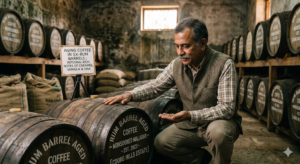
Barrel ageing is an experimental processing extension: green beans rest inside spirit barrels (rum, whisky, wine) for weeks to months, absorbing aromatic compounds from the barrel's residual spirit and oak structure. Like monsooning, this is a post-processing intervention applied before roasting. The result adds barrel-derived notes — oak, molasses, vanilla, dried fruit — on top of the coffee's base character without introducing alcohol into the final roasted bean. See our full Rum Barrel Aged Coffee guide.
Processing Method Comparison
| Method | Fruit Contact | Acidity | Body | Sweetness | Character |
|---|---|---|---|---|---|
| Washed | Minimal | High | Light-Medium | Clean | Terroir-forward, bright |
| Honey (Yellow) | Low-Medium | Medium | Medium | Balanced | Cleaner sweetness |
| Honey (Red/Black) | High | Low-Medium | Medium-Heavy | Rich | Complex sweetness |
| Natural | Full | Low | Heavy | Intense fruit | Bold, winey, berry |
| Anaerobic | Variable | Low-Medium | Heavy | Complex | Lactic, wine-like |
| Monsooned | None (post-process) | Very Low | Very Heavy | Muted/earthy | Earthy, spice, cocoa |
Processing Traditions in India
India practices the full spectrum of processing methods — washed is traditional and dominant in Karnataka, natural and honey processing have grown significantly in the specialty segment over the last decade, and monsooning remains India's exclusive contribution to global processing diversity. India is also home to a growing experimental processing scene, with producers experimenting with anaerobic fermentation, co-fermentation with spices, and barrel ageing producing genuinely distinctive lots for international specialty buyers.
Choosing Coffee by Processing Method
| You prefer... | Look for |
|---|---|
| Clean, bright, origin clarity | Washed processing |
| Sweetness and balance | Honey (yellow or red) |
| Bold fruit, heavy body | Natural or black honey |
| Low acid, earthy, smooth | Monsooned (Monsoon Malabar) |
| Complex, experimental, winey | Anaerobic or barrel aged |
The easiest way to understand what processing actually does to flavour is to buy a washed and a naturally processed coffee from the same origin (or even the same farm) and brew them identically. The differences you taste between the two are almost entirely due to processing — everything else is held constant. This single experiment teaches more about processing than any amount of reading.
Common Mistakes
Supporting Articles in This Cluster
Taste the Processing Difference
Compare our washed, honey, monsooned, and barrel-aged lots side by side — each tells the same origin story through a completely different processing lens.
Shop by Processing Style →