
What is Coffee Processing?
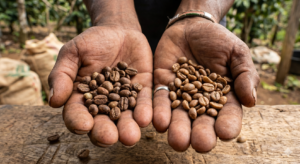
A coffee cherry is far more than a bean waiting to be roasted. Beneath the outer skin sits a layer of fruit pulp, then a sticky, sugar-rich layer called mucilage, then a thin, paper-like husk called parchment — and only inside all of that is the green coffee bean itself, still wrapped in a delicate silver skin. Processing is simply the set of steps used to strip away these layers and turn a wet, fragile cherry into a stable, dry green bean that can be safely stored, shipped, and roasted.Why Coffee Processing Matters
Processing affects nearly every dimension of how a coffee ultimately tastes, and understanding it is one of the fastest ways to predict whether you'll enjoy a bag before you ever brew it.Sweetness
Methods that allow more contact between the fruit's sugars and the bean — like natural or honey processing — tend to produce noticeably sweeter cups than washed coffee, where most of that sugar is removed early.Acidity
Washed coffee typically preserves the brightest, most defined acidity, since fermentation is controlled and brief. Natural and honey processing soften and round that acidity, while anaerobic methods can push it into entirely new, often brighter or more complex territory.Body
Natural-processed coffee tends to have the heaviest, syrupy body, a result of fruit sugars and oils remaining in contact with the bean throughout drying. Washed coffee, by contrast, is typically the lightest-bodied of the major methods.Aroma
Fermentation — whether brief and controlled or extended and experimental — produces aromatic compounds that don't exist in unfermented coffee, which is part of why natural and anaerobic lots often have such distinctive, fruit-forward noses.Fermentation
Fermentation is central to every processing method, even washed coffee — the question is only how much, how long, and under what conditions. Controlled fermentation builds flavor; uncontrolled fermentation ruins it, which is why timing and hygiene matter enormously at this stage.Shelf Life
Properly dried, well-processed coffee — regardless of method — stores well for months. Poorly dried or under-fermented coffee, however, is far more prone to developing defects and off-flavors over time.Roast Behaviour
Different processing methods affect bean density and sugar content, which in turn changes how a coffee responds to heat. Natural-processed beans, being denser with sugar, often roast differently than washed beans of the same variety and require a roaster to adjust accordingly.| Processing | Sweetness | Acidity | Body | Cleanliness |
|---|---|---|---|---|
| Washed | Medium | High | Light | Excellent |
| Natural | Very High | Medium | Heavy | Fruity |
| Honey | High | Medium-High | Medium | Balanced |
| Anaerobic | Very High | Bright | Medium | Complex |
Coffee Cherry Anatomy
Every processing method is, at its core, a different route through the same physical structure of the cherry.
Skin
The outermost layer, ranging from green to deep red or yellow as the cherry ripens — color is the main visual indicator pickers use to judge ripeness at harvest.Pulp
The fruit itself, sweet and fleshy, removed mechanically in washed and honey processing but left intact through drying in natural processing.Mucilage
A sticky, sugar-rich layer beneath the pulp, sometimes called "the honey" — it's the amount of mucilage left on the bean during drying that defines the different honey process grades.Parchment
A thin, papery husk that protects the bean during drying and storage, removed just before export in a step called hulling.Silver Skin
A delicate, paper-thin membrane directly on the bean's surface, mostly removed during hulling and roasting, though small traces sometimes remain visible as "chaff" after roasting.Bean
The green coffee seed itself — what ultimately gets roasted, ground, and brewed, and the end point every processing method is working toward.Washed Process
The washed process — also called the wet process — is the most widely used method for producing clean, well-defined specialty coffee, and the traditional standard across much of Karnataka.
Depulping
Within hours of picking, ripe cherries are run through a depulping machine that mechanically strips away the skin and pulp, leaving the mucilage-coated bean still encased in parchment.Fermentation
The mucilage-covered parchment is then submerged in fermentation tanks, typically for 12 to 48 hours depending on climate and producer preference, allowing naturally occurring enzymes to break down the sticky mucilage layer.Washing
Once fermentation is complete, the beans are thoroughly rinsed in clean water, removing the now-loosened mucilage and leaving a clean parchment-covered bean.Drying
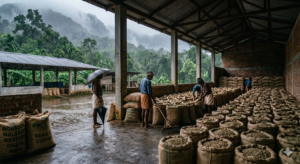
The washed parchment coffee is then spread out on raised beds or patios to dry slowly over one to three weeks, until it reaches a stable moisture content suitable for storage and milling.Advantages
Produces a highly consistent, clean cup with clear varietal and origin character, and is generally more forgiving of minor processing errors than fruit-on methods.Disadvantages
Requires significant water use and infrastructure (tanks, washing channels), and lacks the heavier body and fruit-forward sweetness that natural or honey processing can deliver.Typical Flavours
Citrus, floral notes, tea-like clarity, and a crisp, defined finish — exactly the profile that made Chikmagalur's washed Arabica so well regarded.Best Brewing Methods
Pour-over, V60, and AeroPress, where the coffee's clarity and acidity aren't muted the way they would be in a heavier brew method.Natural Process
The natural process — also called dry process — is the oldest method of producing coffee, and one of the most distinctive in flavor.
Berry Flavours
This extended fruit contact is what gives natural-processed coffee its signature berry, jammy, and sometimes wine-like notes — flavors that simply don't develop in washed coffee.Heavy Body
The sugars and oils absorbed from the drying fruit give natural-processed coffee a noticeably heavier, syrupy mouthfeel compared to washed coffee from the same farm.Chocolate
Alongside the fruit notes, natural processing often brings out deep chocolate and dried-fruit sweetness, particularly in lower-acid varieties.Tropical Fruits
In warmer, more humid growing climates, natural processing can develop pronounced tropical fruit notes — mango, pineapple, or stone fruit — making it a favorite among drinkers who want their coffee to taste unmistakably fruity.Honey Process
The honey process sits deliberately between washed and natural, removing the skin and pulp like a washed coffee but leaving some or all of the sugary mucilage on the bean during drying, the way natural processing does. Despite the name, no actual honey is involved — the term refers to the sticky, amber appearance of the mucilage-coated parchment as it dries.
Yellow Honey
The least mucilage is left on the bean, dried quickly, producing a cup closest to washed coffee with a touch of extra sweetness.Red Honey
A moderate amount of mucilage remains, with a slower drying process, producing a noticeably sweeter, fuller cup than yellow honey.Black Honey
Nearly all the mucilage is left intact, and drying is slowed down significantly — often under shade — producing the heaviest body and most intense sweetness of the three honey grades, closest in character to a light natural.Go Deeper on Honey Processing
Curious how yellow, red, and black honey actually differ in the cup, and how to brew each one? We've broken it all down in a dedicated guide. Read the Honey Process Guide →Semi-Washed / Wet Hulled
Semi-washed processing, often called wet hulling, is most closely associated with Indonesia — particularly Sumatra — where humid growing conditions make standard drying impractical. After a brief fermentation and rinse, the parchment is hulled while the bean is still relatively high in moisture, then dried for a second, shorter period after hulling. This unusual order — hulling before full drying — produces the distinctively earthy, low-acid, full-bodied profile associated with Sumatran coffee, along with a deep green-blue bean appearance unique to the method. Wet hulling is rare in India, where drying climates and infrastructure are generally better suited to traditional washed or natural processing, but it remains a useful reference point for readers exploring how processing varies across different global growing regions.
Experimental Processing
Beyond the traditional methods, a wave of experimental processing techniques has reshaped what specialty coffee can taste like over the past decade. These methods typically involve more deliberate control over fermentation — temperature, time, sealed environments, and sometimes added cultures — to push flavor in specific, often dramatic directions. Each deserves (and will eventually get) its own dedicated guide; here's a brief introduction to each.
Anaerobic Fermentation
Cherries or depulped beans are sealed in oxygen-free tanks during fermentation, intensifying flavor development and producing bold, often tropical or boozy notes not found in open-air fermentation.Carbonic Maceration
Borrowed directly from winemaking, whole cherries are fermented in a carbon dioxide-rich, sealed environment, producing vivid, often intensely fruity and floral flavor profiles.Yeast Fermentation
Specific yeast strains are introduced during fermentation to guide flavor development in a more predictable, repeatable direction than relying on naturally occurring microbes alone.Lactic Fermentation
Lactic acid bacteria are encouraged or introduced during fermentation, often producing a creamy, yogurt-like tang alongside fruit-forward sweetness.Double Fermentation
Coffee undergoes two distinct fermentation stages — sometimes aerobic followed by anaerobic — layering flavor complexity beyond what a single fermentation cycle can achieve.Thermal Shock
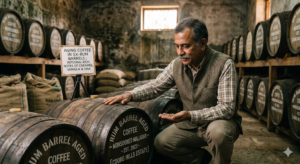
Cherries or parchment are exposed to rapid temperature changes during processing, a technique borrowed from food science used to alter cell structure and influence flavor extraction.Barrel Aging
Green or processed beans are rested inside spirit barrels — rum, whisky, or wine casks — absorbing subtle wood and spirit-derived notes over weeks of aging.Cinnamon Fermentation
Whole spices are introduced during the fermentation stage, infusing the bean with warm, aromatic notes well before it ever reaches the roaster.Fruit Fermentation
Additional fruit is introduced alongside the cherry during fermentation, layering extra fruit-forward complexity on top of the coffee's own natural sweetness.Coffee Processing in India
Processing style varies meaningfully across India's coffee regions, shaped by climate, infrastructure, and how far a given estate has moved toward specialty-focused production.Coorg
Both washed and natural processing are common in Coorg, with washed being the more traditional, widely available style — though a growing number of estates are experimenting with natural and honey lots for the specialty market.Chikmagalur
Washed processing dominates here, prized for preserving the brighter, floral character that the region's higher altitude produces.Baba Budangiri
Given its small, high-altitude lots, processing here tends to be especially careful and traditional, typically washed, to protect the delicate character this micro-origin is known for.Araku
Both washed and natural processing are used across Araku's cooperative-run facilities, with natural and honey lots increasingly produced specifically to highlight the region's naturally fruity, tangy profile.Wayanad
Predominantly washed and natural processing for Robusta, with the natural method especially common given the region's warm, humid climate suited to sun-drying whole cherries. Indian specialty producers more broadly are increasingly adopting experimental methods — anaerobic fermentation, honey processing, and barrel aging in particular — as the country's specialty coffee movement matures and producers look to differentiate their lots in an increasingly competitive global market.Which Processing Method Should You Choose?
| You Like... | Try |
|---|---|
| Chocolate | Washed |
| Berries | Natural |
| Sweet & Balanced | Honey |
| Funky | Anaerobic |
| Boozy | Barrel Aged |
Brewing Recommendations by Process
| Process | Espresso | Pour Over | French Press | AeroPress |
|---|---|---|---|---|
| Washed | ⭐⭐⭐⭐ | ⭐⭐⭐⭐⭐ | ⭐⭐⭐ | ⭐⭐⭐⭐ |
| Honey | ⭐⭐⭐⭐ | ⭐⭐⭐⭐ | ⭐⭐⭐⭐ | ⭐⭐⭐⭐ |
| Natural | ⭐⭐⭐ | ⭐⭐⭐⭐ | ⭐⭐⭐⭐⭐ | ⭐⭐⭐⭐ |
Common Myths About Processing
Dark Roast Doesn't Mean Stronger Coffee
Roast level affects flavor, not caffeine content — a light roast generally contains slightly more caffeine by volume than a dark roast of the same bean, the opposite of what most people assume.Honey Process Contains No Honey
The name refers to the sticky, amber appearance of the dried mucilage, not any actual honey added during processing.Natural Process Doesn't Add Fruit
The fruity flavors in natural-processed coffee come entirely from the coffee cherry's own sugars interacting with the bean during drying — no external fruit or flavoring is involved.Fermentation Doesn't Mean Spoiled Coffee
Controlled fermentation is a deliberate, carefully managed step in virtually every processing method, including washed coffee — it's uncontrolled, unmonitored fermentation that produces defects, not fermentation itself.Experimental Doesn't Always Mean Better
Bold, fermentation-driven processing can produce extraordinary coffee, but it can just as easily overwhelm a bean's natural character if poorly executed — experimental isn't automatically superior to a well-executed traditional method.How Zenforest Chooses Processing Methods
We don't apply a single processing method across every lot — we choose based on what each specific coffee, from each specific origin, is best suited to express.Origin
A coffee's growing region and altitude already point toward certain strengths — a high-altitude, floral lot is often better suited to washed processing that preserves clarity, while a fuller-bodied lowland coffee can handle the intensity of natural or honey processing.Processing
From there, we work directly with growing partners to choose a processing method that complements those existing strengths rather than fighting against them, whether that means a clean washed lot or an experimental anaerobic batch.Roast Profile
Roasting is adjusted to match the processing method — natural and honey-processed beans, being denser with sugar, are roasted differently than washed beans to avoid scorching that sugar content.Brewing Suitability
Finally, we consider how a coffee will actually be brewed by the people drinking it, favoring processing and roast combinations that perform well across the brew methods our customers use most. This approach is exactly why our range spans from clean, traditional washed single origins to more experimental offerings like our Cinnamon Fermented Coffee and Rum Barrel Aged Coffee — each chosen and processed specifically to showcase what that particular lot does best.Frequently Asked Questions
Which coffee process is sweetest?
Natural processing generally produces the sweetest cup, since the bean stays in contact with the whole drying fruit throughout processing, allowing the most sugar to be absorbed. Black honey-processed coffee comes a close second.
Does Honey Process use real honey?
No. The name refers to the sticky, amber-colored mucilage left on the bean during drying, which visually resembles honey — no actual honey is used in the process.
Which processing method has the most caffeine?
Caffeine content is determined mainly by coffee species (Arabica vs Robusta), not processing method. Processing changes flavor, body, and acidity, but doesn't meaningfully alter caffeine levels.
Is anaerobic coffee safe?
Yes, when properly executed by experienced producers. Anaerobic fermentation is a controlled, monitored process, not unregulated spoilage — reputable producers carefully manage time, temperature, and sealed environments to ensure a safe, high-quality result.
Which process is best for espresso?
Washed and honey-processed coffees tend to perform best in espresso, offering enough clarity and balance to cut through milk without becoming muddled, though natural-processed coffee can also work well for drinkers who want a fruitier, bolder shot.
Which coffee process is best for beginners?
Washed coffee is generally the easiest entry point, since its clean, balanced profile is closest to what most people expect coffee to taste like, making it easier to brew consistently while you build your palate for more adventurous processing styles.
How long does fermentation typically take?
Washed processing typically ferments for 12 to 48 hours, while experimental methods like anaerobic fermentation can extend to several days, depending on the flavor profile the producer is aiming for.
Can the same coffee be processed multiple ways?
Yes. Many farms split a single harvest across washed, natural, and honey lots specifically to compare how each method expresses that particular coffee's underlying character.
Does processing affect shelf life?
Properly dried coffee from any processing method stores well, but poorly dried or under-fermented lots — regardless of method — are more prone to developing defects and off-flavors over time.
Is natural process coffee always fruitier than washed?
Almost always, yes. The extended contact with whole fruit during drying is specifically what produces natural processing's fruit-forward character, a flavor washed coffee — where the fruit is removed almost immediately — simply doesn't develop.
Processing Is the Hidden Half of Flavor
Origin, altitude, and roast all matter — but processing is just as often the difference between a coffee that's pleasant and one that's unforgettable. The same cherry can become a clean, bright washed coffee or a heavy, jammy natural depending entirely on what happens in the days right after harvest. The best way to understand this isn't just reading about it — it's tasting the same origin across different processing methods side by side. To see how processing fits alongside grading and origin in the bigger picture, revisit our guides on What is Specialty Coffee and Indian Coffee Regions Explained.Follow us on Instagram for more updates and behind-the-scenes stories from the estates.