

Coffee Bitterness Explained

A little of coffee bitterness is a natural, expected part of coffee — but when it dominates the cup, something in your process usually needs adjusting. Bitterness is also the most fixable flavour problem in home brewing, almost always traceable to one of a handful of common causes. Quick Answer Excessive coffee bitterness is usually caused by over-extraction, water that’s too hot, a roast that’s too dark, or a grinder producing uneven particles. Identifying which of these applies to your setup almost always resolves the problem without needing to change beans. What’s in this guide Over Extraction Dark Roast Water Temperature Bad Grinder Solutions Common Mistakes Continue Learning Recommended Coffees Learn More FAQs Over Extraction Over-extraction happens when water pulls too many compounds out of the coffee grounds, including bitter, harsh compounds that should stay behind. It’s typically caused by too fine a grind, too long a brew time, or too much agitation. Dark Roast Dark roasting itself introduces bitterness as a natural byproduct of pushing past second crack — the same process that builds bold, smoky flavour also breaks down sugars in ways that taste bitter. This is roast-driven bitterness, not a brewing mistake. Water Temperature Water that’s too hot — boiling straight off the stove, for example — extracts bitter compounds too aggressively. Staying within the recommended 90–96°C window avoids scalding delicate flavour while still extracting properly. Bad Grinder Blade grinders produce wildly inconsistent particle sizes, creating a mix of over-extracted dust and under-extracted chunks in the same brew — both fine particles and large ones contribute to a bitter, muddled cup. A quality burr grinder solves this directly. Solutions Cause Fix Over-extraction Coarsen the grind or shorten brew time Water too hot Cool water to 90-96°C before brewing Dark roast bitterness Try a lighter roast or different brew ratio Inconsistent grind Switch to a burr grinder Stale beans Use beans within a few weeks of roast date Zenforest Expert Tip If your coffee tastes consistently bitter no matter what beans you use, start by checking your grinder. An inconsistent blade grinder is the single most common hidden cause of bitterness in home brewing. Common Mistakes ✕Using boiling water straight off the stove✕Brewing with a blade grinder instead of a burr grinder✕Letting coffee steep too long in immersion brewing✕Assuming all bitterness means bad beans✕Ignoring grind size as a variable when troubleshooting Continue Learning Coffee Extraction→Roast Levels→Brewing Ratios→Coffee Brewing Temperature→ Recommended Coffees Smooth, Low-Bitterness Coffees Coorg Highlands Learn More Specialty Coffee Association (SCA)↗ Frequently Asked Questions Is bitterness always bad in coffee? Not entirely — a touch of bitterness is part of coffee’s natural character. Dominant, harsh bitterness is the problem to fix. Does dark roast always taste more bitter? Generally yes — extended roasting breaks down sugars in ways that add bitterness, separate from any brewing issues. Why does my coffee taste bitter even with light roast beans? Most likely over-extraction — check your grind size, water temperature, and brew time. Can water temperature alone cause bitterness? Yes — water above 96°C extracts bitter compounds too aggressively, even with otherwise correct technique. Does a cheap grinder really make a noticeable difference? Yes — inconsistent particle sizes from blade grinders are one of the most common causes of bitter, muddled coffee. Bitterness Is Almost Always Fixable Before blaming your beans, work through grind size, water temperature, and brew time — in that order. Most bitterness complaints disappear with one or two small adjustments to your brewing setup. Explore More in the Coffee Academy Every cup tells a story — keep learning, keep tasting, and keep exploring what makes specialty coffee worth the extra care. Visit the Coffee Academy →
Coffee Aroma Explained

Aroma/Smell does most of the heavy lifting in how we perceive flavour, and coffee is no exception. Long before a sip touches your tongue, aroma has already told your brain most of what it’s about to taste. Learning to pay attention to aroma — and understanding the different stages professional tasters separate it into — is one of the simplest ways to taste coffee more thoroughly. Quick Answer Coffee aroma is the smell released by the bean and brewed coffee at different stages — dry fragrance from ground beans, wet aroma once water hits the grounds, and volatile compounds that continue evolving as the coffee cools. Together they account for the majority of what we perceive as flavour. What’s in this guide Dry Aroma (Fragrance) Wet Aroma Fragrance vs Aroma Volatile Compounds Common Mistakes Continue Learning Recommended Coffees Learn More FAQs Dry Aroma (Fragrance) Sometimes called fragrance, dry aroma is the smell released by freshly ground coffee before any water touches it. Smelling the dry grounds is the first step in any proper tasting and often hints at what’s to come — chocolate, fruit, or floral notes are frequently detectable here. Wet Aroma Wet aroma is released the moment hot water contacts the grounds, especially during the bloom phase, and is typically far more intense and revealing than dry fragrance. This burst of aroma is part of why professional cuppers lean in close immediately after pouring. Fragrance vs Aroma In formal cupping language, “fragrance” specifically refers to the dry smell and “aroma” refers to the wet smell — a distinction professional scoring sheets track separately, since the two can differ meaningfully in intensity and character. Term When It’s Released What It Reveals Fragrance Dry, before water Early hints of chocolate, fruit, floral notes Aroma Wet, after water hits grounds Fuller, more intense aromatic profile Volatile Compounds Hundreds of distinct volatile aromatic compounds form during roasting, each evaporating and becoming detectable at different temperatures as the coffee brews and cools. This is why a cooling cup can reveal notes that weren’t apparent when it was freshly poured — different compounds become perceptible at different temperatures. Zenforest Expert Tip Smell your coffee three times: once as dry grounds, once right after pouring water, and once more after it’s cooled for a couple of minutes. Each stage reveals different aromatic compounds, and the cooled cup often shows you the most. Common Mistakes ✕Skipping the smell step entirely before tasting✕Only smelling once instead of at multiple temperatures✕Drinking coffee too hot, which suppresses aroma perception✕Brewing with stale beans, which have lost most of their volatile aromatics✕Ignoring aroma when evaluating a new coffee Continue Learning Coffee Flavour Notes→Coffee Tasting→Roast Levels→ Recommended Coffees Highly Aromatic Coffees Vanilla WhispersRum Barrel Aged Learn More Specialty Coffee Association (SCA)↗ Frequently Asked Questions What’s the difference between fragrance and aroma in coffee? Fragrance refers to the dry, pre-brew smell of ground coffee; aroma refers to the smell released once water hits the grounds. Why does coffee smell different as it cools? Different volatile aromatic compounds evaporate and become detectable at different temperatures, which is why cooling coffee can reveal new notes. Does grind size affect aroma? Yes — finer grinds release aroma more quickly and intensely than coarse grinds, since more surface area is exposed. Why does fresh coffee smell stronger than older coffee? Volatile aromatic compounds break down over time, so freshly roasted and freshly ground coffee always smells more pronounced than stale coffee. Can aroma alone tell you how a coffee will taste? Largely, yes — smell accounts for the majority of perceived flavour, so a strong aroma read is one of the best early predictors of the cup. Aroma is Where Tasting Actually Begins The next time you brew, slow down before your first sip and really smell the coffee at each stage. You’ll be surprised how much of the cup’s character you can pick up before it ever reaches your tongue. Explore More in the Coffee Academy Every cup tells a story — keep learning, keep tasting, and keep exploring what makes specialty coffee worth the extra care. Visit the Coffee Academy →
Coffee Sweetness Explained
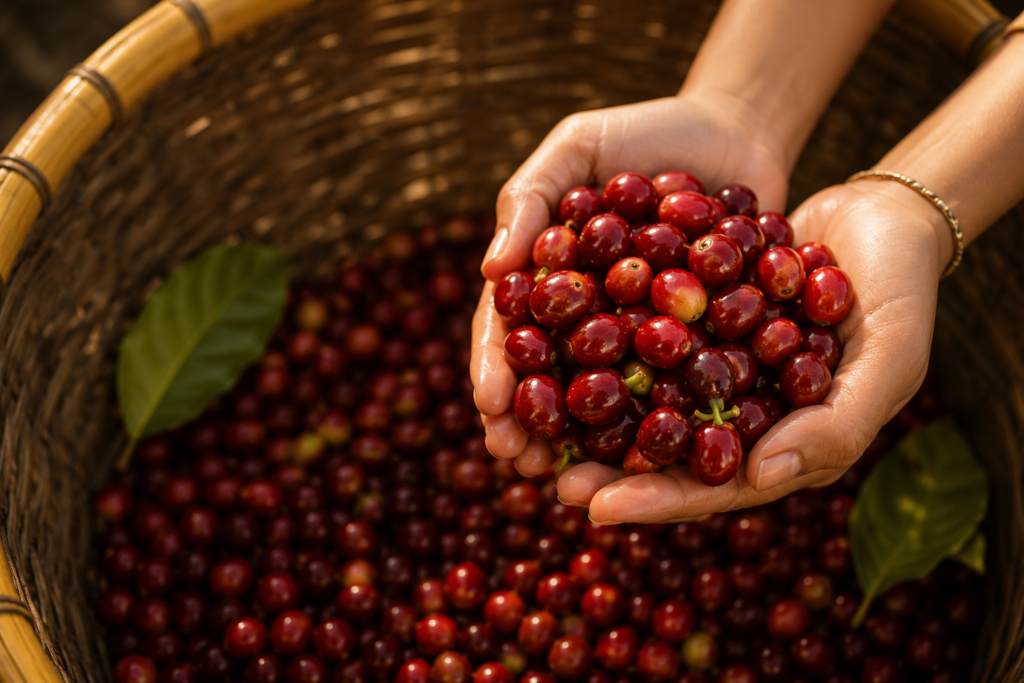
Great coffee should taste sweet — not because sugar was added, but because of natural sugars developed in the cherry and transformed during roasting. Sweetness is one of the clearest signs of a well-grown, well-processed, well-roasted coffee, and learning to recognise it changes how you evaluate every cup you drink. Quick Answer Coffee sweetness comes from natural sugars in the cherry that survive processing and are transformed by roasting into flavours like caramel, honey, and brown sugar. No sugar is ever added — sweetness is entirely a product of ripeness, processing, and roast development. What’s in this guide Natural Sugars Caramelization Processing’s Role in Sweetness Roasting’s Role in Sweetness Brewing’s Role in Sweetness Common Mistakes Continue Learning Recommended Coffees Learn More FAQs Natural Sugars Ripe coffee cherries are genuinely sweet, packed with sugars that develop as the fruit matures on the tree. Slower ripening at higher altitudes allows more sugar to accumulate, which is part of why high-grown coffees often taste sweeter. Caramelization During roasting, those natural sugars undergo caramelization, breaking down into the toasty, sweet compounds responsible for caramel, toffee, and brown sugar flavours. This process peaks around medium roast, before excessive roasting tips sugars into bitterness. Roast Level Sweetness Character Light Delicate, fruit-driven sweetness Medium Peak caramelization — caramel, brown sugar Dark Reduced sweetness, masked by bitterness Processing’s Role in Sweetness Processing method has an enormous effect on perceived sweetness. Natural and honey processing keep the bean in contact with fruit sugars during drying, building noticeably more sweetness than washed processing, where most of that sugar is removed early. See our full Coffee Processing Guide for the complete breakdown. Roasting’s Role in Sweetness Roast level directly controls how much caramelization develops. Light roasts preserve delicate, fruit-driven sweetness; medium roasts often taste sweetest overall thanks to peak caramelization; dark roasts can lose much of that sweetness to bitterness from over-development. Brewing’s Role in Sweetness Extraction level matters enormously — under-extracted coffee tastes thin and sour rather than sweet, while properly extracted coffee allows sweetness to come through clearly. Slightly coarser grinds and shorter contact times can sometimes highlight sweetness that gets muddled by over-extraction. Zenforest Expert Tip If your coffee tastes flat instead of sweet, the most common culprit is under-extraction. Try a slightly finer grind or a few extra seconds of contact time before assuming the beans themselves lack sweetness. Common Mistakes ✕Assuming sweetness means sugar was added✕Over-roasting beans past their sweetness peak✕Under-extracting and mistaking thinness for lack of sweetness✕Ignoring processing method when shopping for sweeter coffee✕Brewing with stale beans, which lose sweetness quickly Continue Learning Honey Process→Coffee Body→Coffee Acidity→Coffee Processing Methods→ Recommended Coffees Naturally Sweet Coffees Vanilla Whispers Learn More Specialty Coffee Association (SCA)↗ Frequently Asked Questions Does coffee actually contain sugar? No added sugar — but it does contain natural plant sugars from the ripe cherry that survive into the roasted bean. Which roast is sweetest? Medium roast typically tastes sweetest, sitting at the peak of caramelization before bitterness from further roasting sets in. Why does my coffee taste sour instead of sweet? This usually points to under-extraction — try a finer grind or longer brew time. Which processing method produces the sweetest coffee? Natural and honey processing generally produce the sweetest cups, thanks to extended contact with the cherry’s natural sugars. Does altitude affect sweetness? Yes — higher altitude slows cherry ripening, allowing more sugar to develop before harvest. Sweetness is the Mark of a Well-Made Cup Next time you brew, pause before your first sip and ask whether the coffee tastes sweet, flat, or sour — that single check tells you more about extraction and quality than almost anything else. Sweetness is always the goal, never the exception. Explore More in the Coffee Academy Every cup tells a story — keep learning, keep tasting, and keep exploring what makes specialty coffee worth the extra care. Visit the Coffee Academy →
Coffee Body Explained

Body is the part of coffee tasting that’s easiest to feel and hardest to describe in words. It’s the weight and texture of a coffee on your tongue — the difference between something that feels light and tea-like and something that feels thick and syrupy. Understanding body helps you choose coffees that match not just the flavour you want, but the physical sensation you want in your mouth. Quick Answer Coffee body refers to the weight, thickness, and texture of a coffee in the mouth, ranging from light and tea-like to heavy and syrupy. It’s shaped primarily by processing method, roast level, and brewing method — natural and dark-roasted coffees tend to have the heaviest body. What’s in this guide Light Body Medium Body Heavy Body Mouthfeel Examples by Method and Process Common Mistakes Continue Learning Recommended Coffees Learn More FAQs Light Body Light-bodied coffees feel delicate and tea-like on the palate, with little perceived weight or coating sensation. Washed, light-roasted coffees brewed via pour-over typically sit at this end of the spectrum. Medium Body Medium body feels rounder and more substantial without becoming heavy — a comfortable middle ground that most drinkers find familiar and approachable. Medium roasts and many honey-processed coffees tend to land here. Heavy Body Heavy-bodied coffees feel thick, syrupy, and coating, often lingering noticeably on the palate. Natural processing, dark roasting, and immersion brewing methods like French press all push body in this direction. Mouthfeel Mouthfeel is the broader sensory category body belongs to, covering texture qualities like silky, creamy, gritty, or oily. Oils suspended in the coffee — more present in darker roasts and unfiltered brew methods — contribute significantly to a fuller, creamier mouthfeel. Examples by Method and Process Factor Lighter Body Heavier Body Processing Washed Natural / Honey Roast Light Dark Brew Method Pour-over (paper filter) French Press / Espresso Filter Type Paper (traps oils) Metal mesh (lets oils through) Zenforest Expert Tip If you want to taste body in isolation, brew the same coffee two ways — once through a paper filter, once through a French press. The paper filter traps oils and fine particles, producing a noticeably lighter body from the exact same beans. Common Mistakes ✕Confusing body with flavour intensity✕Assuming heavy body always means better quality✕Using a paper filter when you actually want a fuller mouthfeel✕Ignoring how roast level affects body✕Expecting the same body across different brew methods Continue Learning Coffee Sweetness→Coffee Bitterness→Roast Levels→Coffee Flavour Notes→ Recommended Coffees Full-Bodied Coffees Monsoon MalabarRitual Roast Learn More Specialty Coffee Association (SCA)↗ Frequently Asked Questions What gives coffee a heavy body? Natural processing, darker roasting, and brewing methods that let oils and fine particles through (like French press) all build heavier body. Is heavier body better? Not necessarily — it’s a style preference, not a quality marker. Light body can be just as well-made as heavy body. Does grind size affect body? Indirectly, yes — finer grinds extract more oils and fine particles in immersion brewing, which can increase perceived body. Why does espresso feel heavier than pour-over? Espresso’s pressurized extraction pulls more oils and dissolved solids into a concentrated shot, creating a much fuller mouthfeel. Can the same coffee have different body depending on brewing? Yes — brew method has a major influence on body, sometimes more than the bean itself. Body Shapes How a Coffee Feels, Not Just Tastes Once you start paying attention to weight and texture alongside flavour, you’ll notice body is one of the biggest reasons two coffees with similar flavour notes can feel completely different to drink. Experiment with brew methods to find the body that suits you best. Explore More in the Coffee Academy Every cup tells a story — keep learning, keep tasting, and keep exploring what makes specialty coffee worth the extra care. Visit the Coffee Academy →
Coffee Acidity Explained
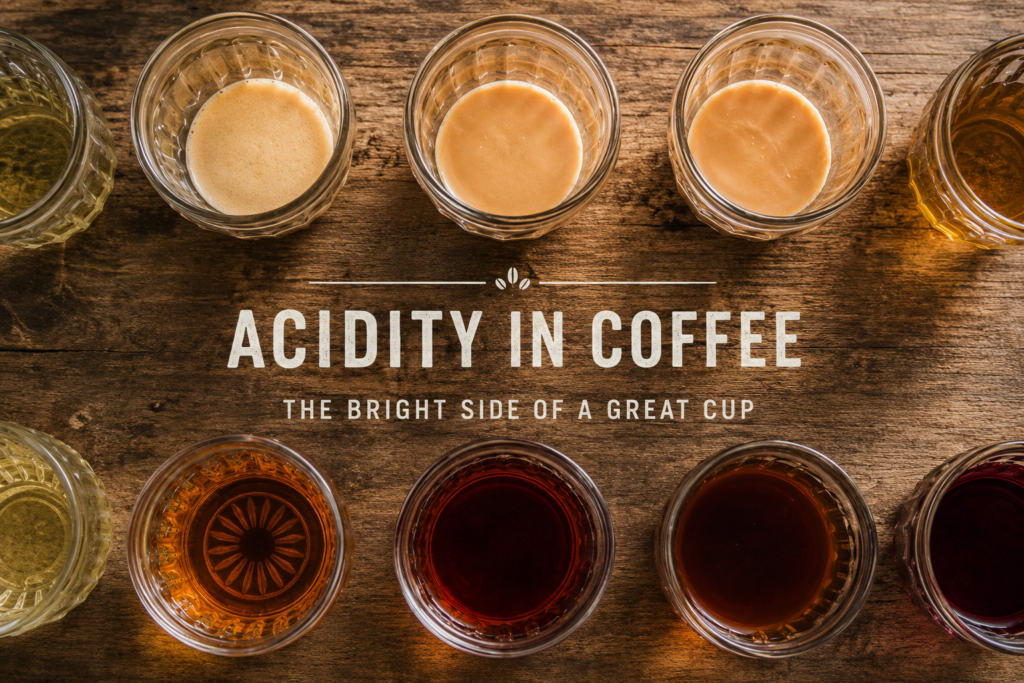
Acidity is one of the most misunderstood words in coffee. To most people, “acidic” sounds like a complaint — something sharp, sour, or unpleasant. In coffee tasting, it means almost the opposite: a bright, lively, structured quality that gives a cup its liveliness and definition. Understanding acidity is one of the fastest ways to start tasting coffee like a professional, and to stop mistaking a coffee’s brightness for a flaw. Quick Answer Coffee acidity refers to the bright, tangy, lively sensation on the palate created by natural organic acids in the bean — citric, malic, phosphoric, and tartaric among them. Good acidity tastes crisp and juicy, not sour; it’s a hallmark of high-altitude, well-processed specialty coffee. What’s in this guide What is Acidity? Good vs Bad Acidity Citric Acid Malic Acid Phosphoric Acid Tartaric Acid How Roasting Changes Acidity Brewing Effects on Acidity Common Mistakes Continue Learning Recommended Coffees Learn More FAQs What is Acidity? In coffee, acidity describes a sensory quality, not a pH measurement you’d notice the way you would with lemon juice. It registers on the sides of the tongue and the roof of the mouth as a bright, crisp, almost sparkling sensation that gives the cup energy and structure. Acid Type Flavor Character Common Origins Citric Bright, citrus-like High-altitude origins Malic Crisp, apple-like Washed Central/South America Phosphoric Smooth, cola-like East Africa (Kenya) Tartaric Winey, grape-like Natural-processed lots Good vs Bad Acidity The difference between good and bad acidity comes down to balance and integration, not intensity. Good Acidity Bright, crisp, juicy — feels lively and balanced against sweetness and body. Bad Acidity Sharp, sour, or vinegary — usually a sign of under-extraction or a roasting defect, not a quality trait. How to Tell Good acidity fades cleanly; bad acidity lingers unpleasantly and feels disconnected from the rest of the cup. Citric Acid Citric acid contributes bright, citrus-like notes — think orange or lemon — and is especially prominent in coffees grown at higher altitudes, where slower ripening allows more of it to develop. Malic Acid Malic acid brings a clean, apple-like brightness, often described as crisp or green-apple sweet, and is common in many washed Central and South American coffees. Phosphoric Acid Phosphoric acid produces a smooth, almost effervescent brightness reminiscent of cola or grapefruit, frequently associated with East African coffees, particularly from Kenya. Tartaric Acid Tartaric acid, the same acid found in grapes and wine, contributes a winey, slightly tannic brightness and shows up most distinctly in naturally processed and some experimentally fermented coffees. How Roasting Changes Acidity Acidity is at its peak in light roasts and steadily declines as roasting progresses. By the time a coffee reaches dark roast, most of its organic acid structure has broken down, which is why dark roasts taste flatter and less bright regardless of the original bean’s acidity potential. Brewing Effects on Acidity Brew method and extraction level both shape how acidity comes through in the cup. Under-extraction tends to emphasize sharp, sour notes, while proper extraction rounds acidity into the bright-but-balanced character that defines a well-made cup. Pour-over methods generally showcase acidity most clearly, while immersion methods like French press soften it. Zenforest Expert Tip If a coffee tastes sour rather than bright, don’t blame the acidity — check your extraction first. A finer grind, slightly longer brew time, or hotter water often resolves sourness without changing beans. Common Mistakes ✕Assuming all acidity is unpleasant✕Confusing sourness with acidity✕Brewing with water that’s too cool, which under-extracts and tastes sour✕Judging acidity from a dark roast, where it’s already mostly gone✕Ignoring grind size as a cause of perceived sourness Continue Learning Coffee Sweetness→Coffee Body→Coffee Flavour Notes→Arabica vs Robusta→ Recommended Coffees Bright, High-Acidity Coffees Coorg HighlandsBourbon Bliss Learn More Specialty Coffee Association (SCA)↗ Frequently Asked Questions Is acidic coffee bad for you? Not for most people. Coffee’s acidity is mild compared to citrus juice, though those with sensitive stomachs may prefer lower-acid options like dark roasts or naturally processed coffees. Which roast has the most acidity? Light roast preserves the most acidity, since extended roasting breaks down the organic acids that create brightness. Why does my coffee taste sour instead of bright? Sourness usually indicates under-extraction — try a finer grind, longer brew time, or hotter water. Does origin affect acidity? Significantly. High-altitude origins like Kenya and Ethiopia are known for pronounced, well-defined acidity, while lower-altitude Robusta tends to be much flatter. Can brewing method change acidity? Yes. Pour-over highlights acidity clearly, while French press and other immersion methods soften and round it. Acidity is a Feature, Not a Flaw Once you start tasting for brightness instead of bracing against sourness, acidity becomes one of the most enjoyable parts of a well-made cup. Try a light roast pour-over next to a dark roast French press and notice how dramatically acidity shifts between the two — it’s one of the clearest ways to train your palate. Explore More in the Coffee Academy Every cup tells a story — keep learning, keep tasting, and keep exploring what makes specialty coffee worth the extra care. Visit the Coffee Academy →
Honey Process Coffee Guide
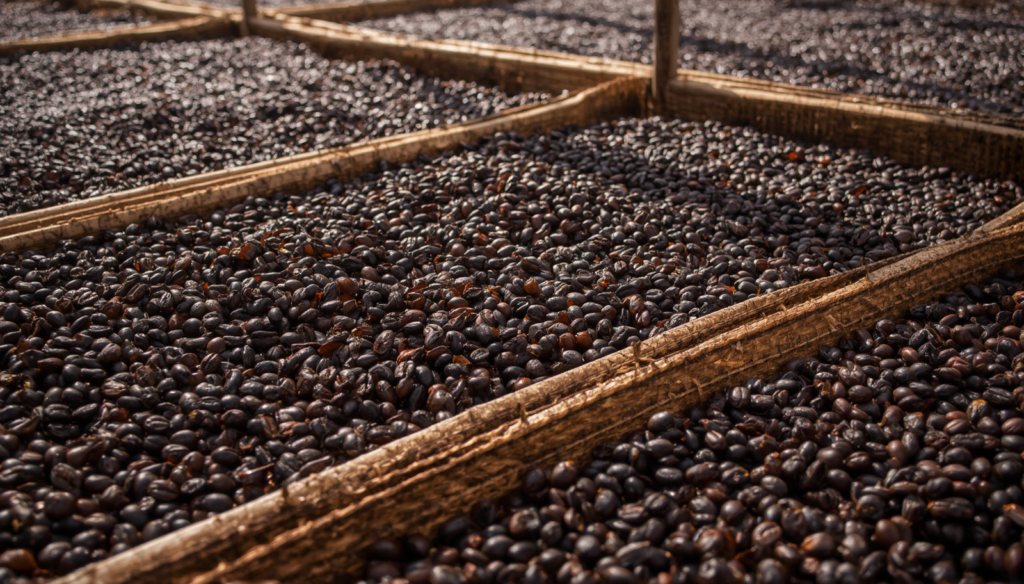
Honey process coffee is a unique processing method that retains some mucilage from the coffee cherry, enhancing sweetness and body compared to washed coffee. It sits between washed and natural processes, offering different sweetness levels based on the amount of mucilage left. Varieties include yellow, red, black, and white honey, each possessing distinct flavor profiles.
Coffee Processing Methods Explained: The Complete Guide to Washed, Natural, Honey & Experimental Coffee
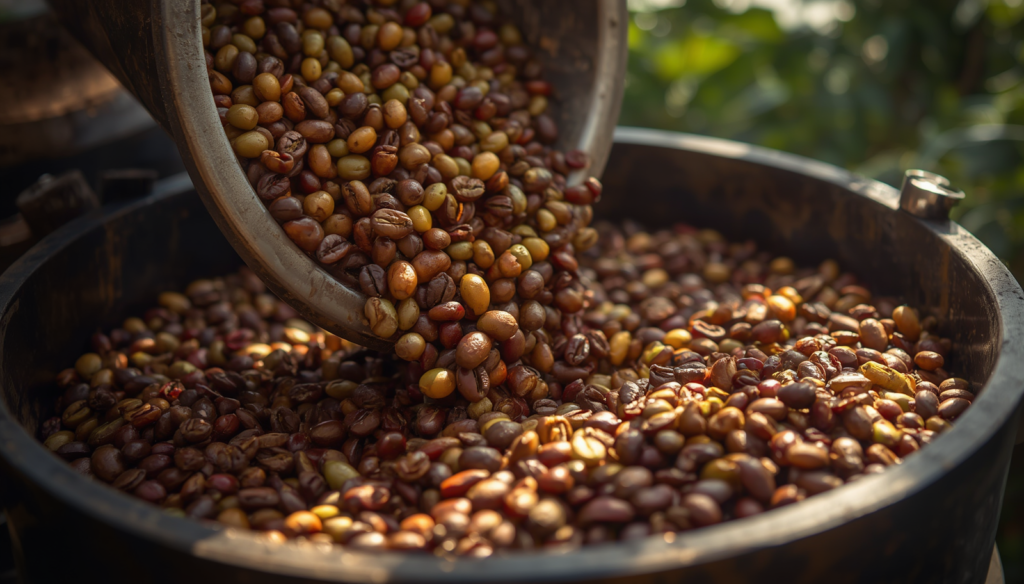
Coffee processing methods determine how every coffee develops its sweetness, body, acidity and aroma long before roasting begins. Processing begins immediately after harvesting, when ripe cherries are turned into stable, dry green coffee ready for export and roasting. The method used at this stage — whether the fruit is washed away immediately, dried whole, or fermented in sealed tanks — has an enormous influence on the final cup, shaping sweetness, acidity, body, and aroma in ways that can be just as significant as the variety or origin itself. This is why two coffees grown on the very same farm, picked from the same trees in the same week, can taste completely different once roasted. One might be bright and clean; the other heavy, fruity, and almost wine-like. The difference isn’t the soil or the altitude — it’s what happened to the cherry in the days immediately after picking. This guide walks through every major processing method used in specialty coffee today, from the traditional washed and natural styles to the honey process, semi-washed methods, and the wave of experimental fermentation techniques reshaping what specialty coffee can taste like. What’s in this guide What is Coffee Processing? Why Coffee Processing Matters Coffee Cherry Anatomy Washed Process Natural Process Honey Process Semi-Washed / Wet Hulled Experimental Processing Coffee Processing in India Which Processing Method Should You Choose? Brewing Recommendations Common Myths How Zenforest Chooses Processing Methods FAQs What is Coffee Processing? A coffee cherry is far more than a bean waiting to be roasted. Beneath the outer skin sits a layer of fruit pulp, then a sticky, sugar-rich layer called mucilage, then a thin, paper-like husk called parchment — and only inside all of that is the green coffee bean itself, still wrapped in a delicate silver skin. Processing is simply the set of steps used to strip away these layers and turn a wet, fragile cherry into a stable, dry green bean that can be safely stored, shipped, and roasted. From Cherry to Green Bean: Cherry → Skin → Pulp → Mucilage → Parchment → Green Bean. Every processing method is really just a different path through these same layers — and the path chosen is what shapes the cup. How quickly that fruit is removed, how much sugar is allowed to ferment into the bean, and how the parchment-covered bean is dried all vary by method — and each variation pushes the final flavor in a different direction. Why Coffee Processing Matters Processing affects nearly every dimension of how a coffee ultimately tastes, and understanding it is one of the fastest ways to predict whether you’ll enjoy a bag before you ever brew it. Sweetness Methods that allow more contact between the fruit’s sugars and the bean — like natural or honey processing — tend to produce noticeably sweeter cups than washed coffee, where most of that sugar is removed early. Acidity Washed coffee typically preserves the brightest, most defined acidity, since fermentation is controlled and brief. Natural and honey processing soften and round that acidity, while anaerobic methods can push it into entirely new, often brighter or more complex territory. Body Natural-processed coffee tends to have the heaviest, syrupy body, a result of fruit sugars and oils remaining in contact with the bean throughout drying. Washed coffee, by contrast, is typically the lightest-bodied of the major methods. Aroma Fermentation — whether brief and controlled or extended and experimental — produces aromatic compounds that don’t exist in unfermented coffee, which is part of why natural and anaerobic lots often have such distinctive, fruit-forward noses. Fermentation Fermentation is central to every processing method, even washed coffee — the question is only how much, how long, and under what conditions. Controlled fermentation builds flavor; uncontrolled fermentation ruins it, which is why timing and hygiene matter enormously at this stage. Shelf Life Properly dried, well-processed coffee — regardless of method — stores well for months. Poorly dried or under-fermented coffee, however, is far more prone to developing defects and off-flavors over time. Roast Behaviour Different processing methods affect bean density and sugar content, which in turn changes how a coffee responds to heat. Natural-processed beans, being denser with sugar, often roast differently than washed beans of the same variety and require a roaster to adjust accordingly. Processing Sweetness Acidity Body Cleanliness Washed Medium High Light Excellent Natural Very High Medium Heavy Fruity Honey High Medium-High Medium Balanced Anaerobic Very High Bright Medium Complex Coffee Cherry Anatomy Every processing method is, at its core, a different route through the same physical structure of the cherry. Cherry Cross-Section: Skin → Pulp → Mucilage → Parchment → Silver Skin → Bean. Skin The outermost layer, ranging from green to deep red or yellow as the cherry ripens — color is the main visual indicator pickers use to judge ripeness at harvest. Pulp The fruit itself, sweet and fleshy, removed mechanically in washed and honey processing but left intact through drying in natural processing. Mucilage A sticky, sugar-rich layer beneath the pulp, sometimes called “the honey” — it’s the amount of mucilage left on the bean during drying that defines the different honey process grades. Parchment A thin, papery husk that protects the bean during drying and storage, removed just before export in a step called hulling. Silver Skin A delicate, paper-thin membrane directly on the bean’s surface, mostly removed during hulling and roasting, though small traces sometimes remain visible as “chaff” after roasting. Bean The green coffee seed itself — what ultimately gets roasted, ground, and brewed, and the end point every processing method is working toward. Washed Process The washed process — also called the wet process — is the most widely used method for producing clean, well-defined specialty coffee, and the traditional standard across much of Karnataka. Depulping Within hours of picking, ripe cherries are run through a depulping machine that mechanically strips away the skin and pulp, leaving the mucilage-coated bean still encased in parchment. Fermentation The mucilage-covered parchment is then submerged
Indian Coffee Regions Explained: Complete Specialty Coffee Guide
Indian Coffee Regions – India produces some of the world’s most distinctive specialty coffee, yet many coffee drinkers know more about Colombia or Ethiopia than they do about their own coffee-growing regions. From the mist-covered estates of Coorg to the tribal farms of Araku Valley, every Indian region produces beans with completely different characteristics — shaped by altitude, rainfall, soil, and the shade canopy each farm grows under. Geography matters because coffee is one of the most terroir-sensitive crops grown anywhere. Altitude matters because cooler, slower ripening at height concentrates sugars and acidity into a denser bean. And climate matters because India is the only major coffee-producing country where the crop is grown almost entirely under a monsoon system, in the shade of rainforest canopy rather than in open sun. This guide walks through every major Indian coffee-growing region, what makes each one distinct, and how to choose a coffee based on the flavour you’re actually looking for. Quick Answer India’s main coffee-growing regions are concentrated in Karnataka (Coorg, Chikmagalur, Baba Budangiri), Kerala (Wayanad), Tamil Nadu (Nilgiris, Yercaud), and Andhra Pradesh (Araku Valley). Each produces a distinct flavour profile shaped by altitude, shade canopy, and processing tradition. Coorg is known for chocolate and spice; Chikmagalur for floral brightness; Araku for fruity acidity; Wayanad for bold Robusta body; and Monsooned Malabar for low acid, earthy richness unlike any other coffee in the world. Key Takeaways Karnataka produces the majority of India’s coffee across Coorg, Chikmagalur, and Baba Budangiri. Indian coffee is shade-grown under native forest canopy — a tradition that predates modern sustainability movements. Altitude is the single biggest driver of flavour difference between regions. Araku Valley is one of specialty coffee’s most remarkable recent origin stories. Monsooning is unique to India’s Malabar Coast and cannot be replicated anywhere else. Northeast India — Meghalaya, Nagaland, Mizoram — is emerging as the next growing frontier. What’s in this guide Why Indian Coffee is Unique Indian Coffee at a Glance Karnataka Kerala Tamil Nadu Andhra Pradesh Odisha Emerging Regions Altitude and Terroir Arabica vs Robusta Across India Shade-Grown Coffee Processing Traditions Which Region Should You Choose? Common Mistakes Continue Learning Recommended Coffees Learn More FAQs Why Indian Coffee is Different Almost every major coffee-producing country grows its crop in full sun. India is the exception. Indian coffee — particularly in Karnataka, Kerala, and Tamil Nadu — is grown almost entirely under a native forest canopy, a tradition that dates back to the 17th century and continues to define the cup today. Shade-Grown by Tradition, Not Trend Coffee in India shares its growing space with rosewood, silver oak, jackfruit, and native rainforest trees. This isn’t a recent sustainability initiative — it’s how Indian coffee has always been farmed, long before “shade-grown” became a marketing term elsewhere. The result is a growing environment that naturally produces lower acidity, heavier body, and more nuanced sweetness than open-field coffee of equivalent origin. Biodiversity and Wildlife Corridors Indian coffee estates frequently sit inside or adjacent to elephant corridors and wildlife reserves. The multi-tier canopy of coffee, spice vines, and timber trees supports birds, insects, and larger mammals, making well-managed estates an extension of the forest rather than a replacement for it. Spice Plantations, Not Monocultures It’s common to find pepper vines climbing the same trees that shade the coffee, along with cardamom, areca nut, and orange trees planted between rows. This intercropping is part of why Indian coffee often carries subtle spice notes even before it reaches the roaster. Zenforest’s Philosophy: This is exactly the model we farm by — coffee grown within a living forest system, not cleared for it. Shade slows ripening, deepens flavour, and keeps the surrounding ecosystem intact. Monsoon-Driven Climate Unlike origins with a single dry harvest season, Indian coffee farming is built around the southwest monsoon. Heavy, predictable rainfall between June and September is followed by a dry harvest window, and this rhythm directly shapes flowering, cherry development, and the unique monsooning process found nowhere else in the world. Slower Ripening, Richer Sugars The combination of shade and elevation slows down how quickly cherries ripen. Slower ripening allows more time for sugars to develop within the cherry, which is part of why well-grown Indian Arabica can show a natural sweetness that fast-ripened, sun-grown coffee often lacks. The science behind this is covered in full in our Specialty Coffee 101 Guide. Indian Coffee Industry at a Glance Statistic Value Coffee-Growing States 13 states across South and Northeast India Major Producing States Karnataka, Kerala, Tamil Nadu Arabica Share Roughly 30% of national production Robusta Share Roughly 70% of national production Export Share The majority of Indian coffee is exported, largely to Europe Domestic Consumption A smaller but steadily growing share, led by the specialty coffee movement Shade-Grown Coverage The vast majority of Indian estates use multi-tier native shade Figures are representative industry approximations and vary year to year with harvest conditions. Karnataka: The Heart of Indian Coffee Karnataka produces the majority of India’s coffee and is home to its two most recognised specialty origins — Coorg and Chikmagalur — along with the historic birthplace of Indian coffee itself, Baba Budangiri. Together, these districts form a continuous belt of coffee-growing hills along the state’s western edge, each shaped by slightly different elevation, rainfall, and farming history despite their geographic proximity. Coorg (Kodagu) History Coorg, also known as Kodagu, is India’s largest coffee-producing district. Coffee cultivation here dates back generations, with estates often passed down through families alongside cardamom and pepper farming on the same land. Altitude Estates in Coorg typically sit between 900 and 1,300 metres above sea level, with the higher pockets producing noticeably denser, more complex beans. Rainfall Coorg receives some of the heaviest monsoon rainfall in Karnataka, often exceeding 2,500mm annually — ideal for both coffee and the spice crops grown alongside it. Soil Rich, well-draining lateritic and forest loam soils, built up over generations of leaf litter from the native shade canopy. Shade Trees Silver oak, rosewood, and jackfruit are common,
Specialty Coffee: Guide 101
Specialty coffee refers to coffee scoring 80+ points on the Specialty Coffee Association scale, produced with exceptional care from farm to cup and roasted to highlight its natural flavours rather than hide defects. It’s more than a morning ritual — it’s a story, a craft, and a journey from farm to cup. At Zenforest Coffee Roasters, we live for that journey, and this guide walks through every part of it: how specialty coffee is graded, why it tastes the way it does, what happens between harvest and roasting, and how to brew it properly once it reaches your kitchen. Specialty Coffee in One Sentence Specialty coffee is coffee that scores 80 or more out of 100 on the Specialty Coffee Association’s grading scale, distinguished by traceable origins, minimal defects, distinct flavour notes, and careful handling at every stage from farm to cup. Key Takeaways Specialty Coffee scores above 80/100. Less than 5% of global coffee qualifies. Arabica dominates specialty coffee. Processing affects flavour. Fresh roasting matters. Brewing completes the journey. What’s in this guide What is Specialty Coffee? How Specialty Coffee is Graded Commodity Coffee vs Specialty Coffee Why Specialty Coffee Matters The Journey From Farm to Cup Coffee Processing Coffee Roasting & Roast Levels Freshness Grind Size Water Brewing Ratio Common Beginner Mistakes How to Choose Your First Specialty Coffee Why Indian Specialty Coffee is Growing Common Myths Frequently Asked Questions Continue Learning What is Specialty Coffee? Specialty coffee is a term used to describe beans that receive a score of 80 points or more out of 100 by certified graders — meaning very high quality, minimal defects, and distinct, pleasing flavour. It distinguishes itself from mass-produced, commodity coffees in the attention paid to every stage of the process: farming, processing, roasting, and brewing. The SCA Definition The Specialty Coffee Association (SCA) formalized the grading framework that the entire industry now uses, setting strict thresholds for defects, moisture content, and screen size alongside the all-important cupping score. Q Graders Coffee is scored by Q Graders — cuppers certified through the Coffee Quality Institute who are trained to evaluate beans against a standardized sensory rubric, ensuring a score from one lab is comparable to a score from another anywhere in the world. The 100-Point System Every lot is evaluated across multiple sensory categories on a 100-point cupping form, with the final score determining not just whether a coffee qualifies as specialty, but roughly how exceptional it is within that category. Why 80 Points Matters Eighty is the hard cutoff: anything below it is, by definition, not specialty coffee, regardless of how it’s marketed. Coffee scoring in the 80s is considered good specialty, the 85+ range is excellent, and anything above 90 is considered exceptional and increasingly rare. Some key features of specialty coffee include traceability and transparency — you often know the exact farm, region, altitude, and processing style — along with distinct flavour notes like fruity, floral, chocolatey, nutty, or winey nuances that depend entirely on origin and microclimate, smaller batches with careful roasting tailored to bring out natural sweetness, and a deep structural emphasis on sustainability and fair practices with growers. Quick Fact: Less than 5% of global coffee production qualifies as specialty grade — making it a genuinely small, carefully cultivated slice of everything grown worldwide. New to Specialty Grading? Before beans ever reach a roaster, their botanical species dictates their baseline complexity. Explore our breakdown on Arabica vs Robusta Coffee to understand why the specialty coffee world is so deeply focused on high-elevation cultivation. Read the Species Guide → How Specialty Coffee is Graded Grading happens through a process called cupping, where Q Graders brew multiple samples of the same coffee under tightly controlled conditions and score it across eight core categories. 1Defects 2Fragrance 3Acidity 4Sweetness 5Balance 6Aftertaste 7Body 8Uniformity Defects Even a single primary defect — a black bean, an insect-damaged bean, mold — can disqualify a lot from specialty grading entirely, which is why meticulous hand-sorting happens long before beans ever reach a roaster. Fragrance & Aroma Graders evaluate the dry grounds’ fragrance and then the aroma released once hot water hits the grounds, both of which hint at the volatile compounds that will carry through into flavour. Acidity Not sourness — acidity in cupping refers to a bright, lively quality that gives a coffee structure and liveliness, prized when it’s clean and well-defined rather than harsh. Sweetness Natural sugars developed during ripening and processing show up here, with higher-scoring coffees displaying a clear, pleasant sweetness rather than flatness. Balance This measures how well acidity, sweetness, and body work together, rather than any one quality overwhelming the others. Aftertaste The flavour and quality that lingers after swallowing — a long, pleasant aftertaste scores significantly higher than a short or unpleasant one. Body The weight and texture of the coffee on the palate, ranging from light and tea-like to thick and syrupy depending on variety and processing. Uniformity & Overall Uniformity checks that every cup of the same sample tastes consistent, while the overall score captures the cupper’s holistic impression of the coffee’s quality and character. Commodity Coffee vs Specialty Coffee Commodity Specialty Mixed origins Single origin Mass roasted Fresh roasted Unknown farm Traceable Dark roast Origin focused Defects allowed Minimal defects Low price Premium Commodity coffee is traded largely as an undifferentiated bulk product, blended from many farms and roasted dark to mask inconsistency. Specialty coffee flips every part of that model — origin, freshness, and traceability become the point rather than something to hide. Why Specialty Coffee Matters Making the switch away from commercial, factory-roasted coffee shifts your morning completely. Better for Farmers Purchasing high-grade coffee directly encourages premium payments to small-scale producers, funding ecological farming practices, fair wages, and long-term land care that commodity pricing simply doesn’t support. Better for the Environment Specialty-focused farms are far more likely to use shade-grown cultivation, minimal chemical inputs, and biodiversity-friendly practices, since quality and ecological care tend to go hand in hand at this
Arabica vs Robusta Coffee: Complete Guide to Taste, Caffeine, Growing Conditions & Differences
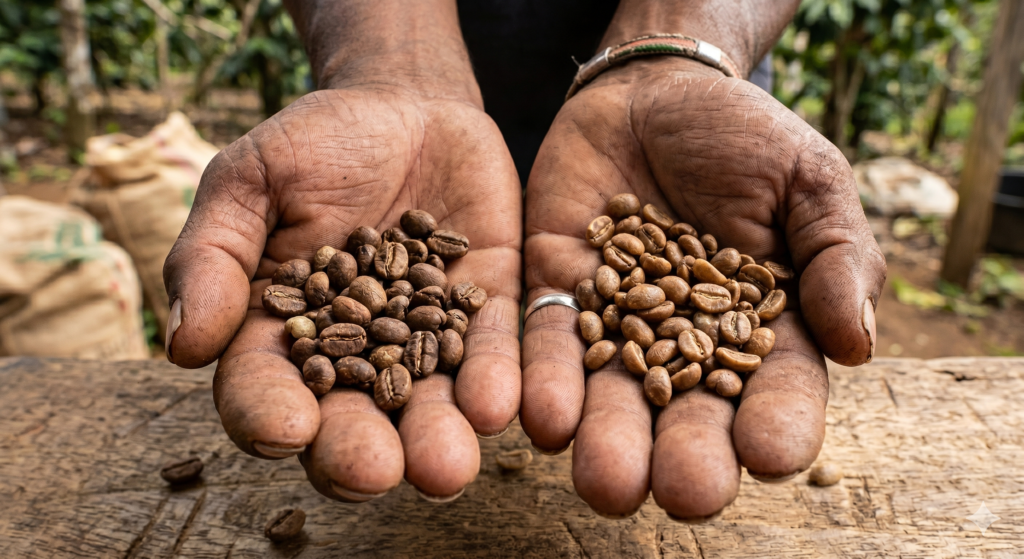
Arabica vs Robusta coffee compared — taste, caffeine, body, and growing conditions. Find out which species suits your brewing style and palate.